I still remember checking my fitness tracker after what felt like a “great” workout and seeing a number that completely surprised me.
I had just finished 30 minutes of running, drenched in sweat, breathing hard, feeling like I had done something serious… and the app showed a calorie burn that was much lower than I expected.
My first reaction was simple:
“That can’t be right.”
That moment pushed me down the rabbit hole of calories burned calculators—and I quickly realized I had been overestimating my workouts for years.
The mistake I didn’t realize I was making
Like most beginners, I used to think:
- More sweat = more calories burned
- Feeling exhausted = effective workout
- Longer sessions = better results
So my workouts were basically based on effort, not data.
I’d run, cycle, or do home workouts and assume I burned “a lot.”
But without tracking anything properly, I had no real idea.
That’s where a calories burned calculator completely changed my perspective.
What a calories burned calculator actually does
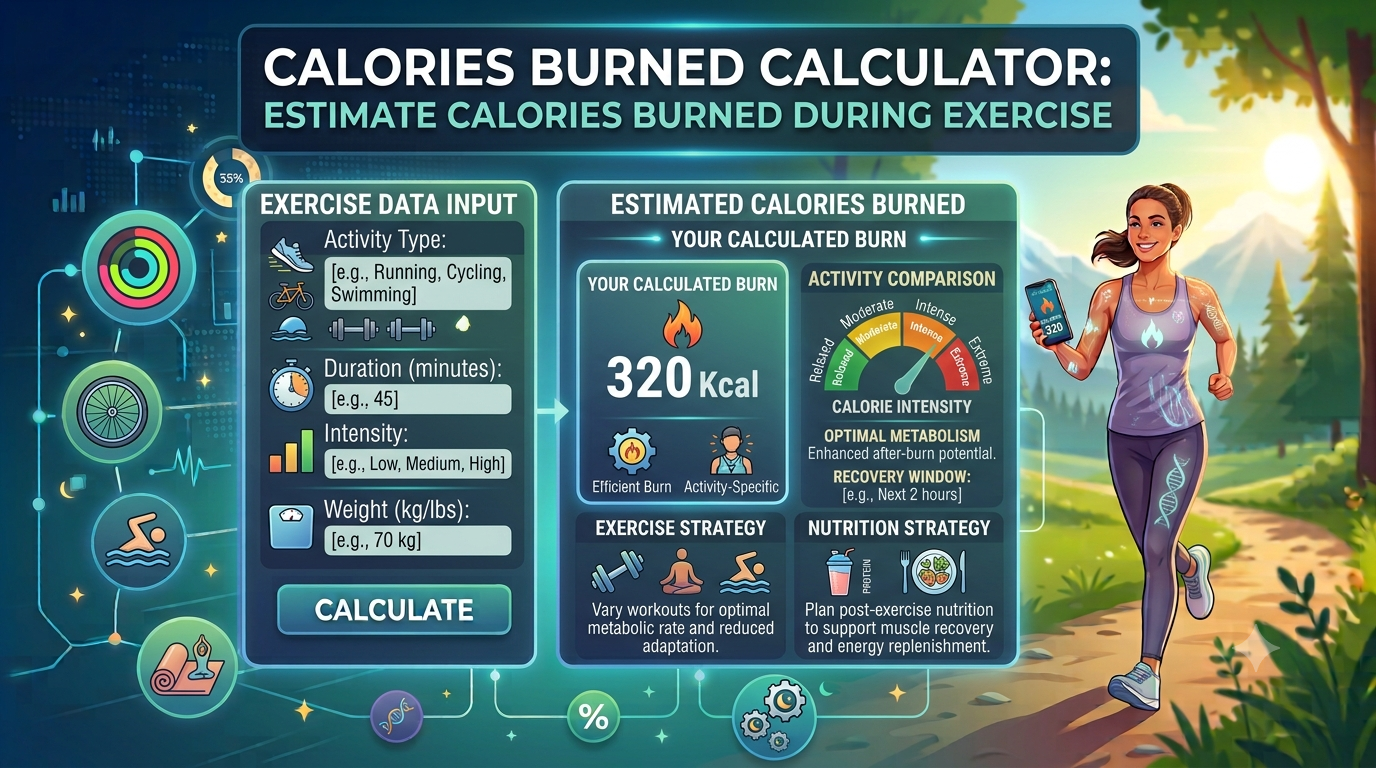
A calories burned calculator estimates how much energy your body uses during physical activity.
It usually considers:
- Your weight
- Type of activity (running, walking, cycling, etc.)
- Duration of exercise
- Intensity level
Some advanced versions also include:
- Age
- Heart rate
- Fitness level
Instead of guessing, it gives you a structured estimate based on scientific formulas.
My first experience using one
The first time I used a calories burned calculator online, I was curious more than anything.
I entered:
- My weight
- 30 minutes of jogging
- Moderate pace
The result was lower than I expected.
At first, I felt a bit disappointed. But then I realized something important:
👉 My perception of effort wasn’t equal to actual energy expenditure.
That was a wake-up call.
Why calorie burn is often misunderstood
One of the biggest misconceptions I had was thinking all exercises burn calories the same way.
But the reality is:
- Body weight matters
- Intensity matters
- Duration matters
- Efficiency matters
For example:
- A heavier person burns more calories doing the same activity
- Walking uphill burns more than walking on flat ground
- Running slowly for longer can burn more than sprinting briefly
It’s not just about how hard it feels.
It’s about how your body uses energy.
How a calories burned calculator works
Most calculators use something called MET values (Metabolic Equivalent of Task).
Without getting too technical, here’s the simple idea:
- Every activity has an energy cost
- Your body weight adjusts that cost
- Time determines total calories burned
So:
Light walking = low MET
Running = high MET
Cycling = medium to high MET depending on speed
The calculator combines all this into one estimate.
Tools I used to track calories burned
Over time, I tried different ways to track calorie burn:
- Google Fit (basic activity tracking)
- Fitbit-style fitness trackers
- Treadmill calorie counters
- Online calorie burned calculators
- Strava for running and cycling sessions
Each tool gave slightly different numbers.
That taught me something important:
👉 Calorie burn is always an estimate, not an exact science.
Step-by-step: how I use a calories burned calculator now
Instead of guessing, I follow a simple routine:
Step 1: Choose the exact activity
Running, walking, cycling, strength training, etc.
Step 2: Enter realistic duration
Not rounded guesses—actual workout time.
Step 3: Select intensity honestly
This is where most people overestimate.
- Light
- Moderate
- Vigorous
Step 4: Enter accurate body weight
Even small differences affect results.
Step 5: Compare trends, not single sessions
One workout doesn’t matter—patterns do.
Real-life example that changed my mindset
Let’s compare two workouts:
Workout A (my old assumption)
- 20 minutes intense running
- Felt exhausting
- I assumed: “I burned a lot”
Workout B (structured tracking)
- 40 minutes steady jogging
- Moderate pace
- Consistent heart rate
Surprisingly, Workout B burned more total calories.
That’s when I stopped trusting effort alone.
Common mistakes people make
I’ve made almost all of these at some point:
Mistake 1: Overestimating intensity
Most people think they are working harder than they actually are.
Mistake 2: Ignoring duration
Short intense bursts don’t always beat longer steady workouts.
Mistake 3: Relying only on machine displays
Treadmill and bike counters are often inaccurate.
Mistake 4: Using calorie burn as the only progress metric
Fitness is not just calories burned.
Mistake 5: Comparing with others
Different bodies burn energy differently.
What I learned after tracking properly
Once I started using calorie burned calculators consistently, I noticed:
- More realistic expectations from workouts
- Better understanding of fat loss progress
- Less frustration when results didn’t match effort
- Smarter workout planning
- Improved consistency
But the biggest change was mental:
I stopped guessing and started understanding.
Why calorie burn is only part of the picture
One thing I wish I understood earlier:
Burning calories is just one side of fitness.
Other factors matter just as much:
- Nutrition
- Sleep
- Strength training
- Recovery
- Daily activity (not just workouts)
You can burn 500 calories in a workout and still not see progress if other habits are off.
A simple way to think about it
Here’s how I now explain it:
A calories burned calculator is like a speedometer in a car.
It doesn’t tell you the destination.
It just shows how fast and efficiently you’re moving.
When a calories burned calculator is most useful
It helps especially if you:
- Want to lose fat
- Track workout progress
- Plan calorie intake
- Compare different exercises
- Stay consistent with fitness goals
Even beginners can use it without any technical knowledge.
Final thoughts
A calories burned calculator didn’t just change how I track workouts—it changed how I understand effort.
Before using it, I thought sweating more meant progress. After using it, I realized consistency and structure matter far more than intensity alone.
It’s not about chasing perfect numbers. It’s about getting a realistic idea of what your body is actually doing.
Once you understand that, workouts stop feeling like guesswork—and start feeling intentional.
Suggested outbound reference: For science-based information on energy expenditure and physical activity, see the official https://www.cdc.gov/physicalactivity/basics/index.htm.