The first time I tried intermittent fasting, I thought the hardest part would be hunger.
Turns out, the real struggle was confusion.
One day I’d do 16:8. The next day I’d accidentally stretch it to 18 hours because I got busy. Then I’d compensate by overeating in the eating window and wondering why nothing felt consistent.
At some point, I realized I wasn’t actually following a plan—I was just “winging it with time.”
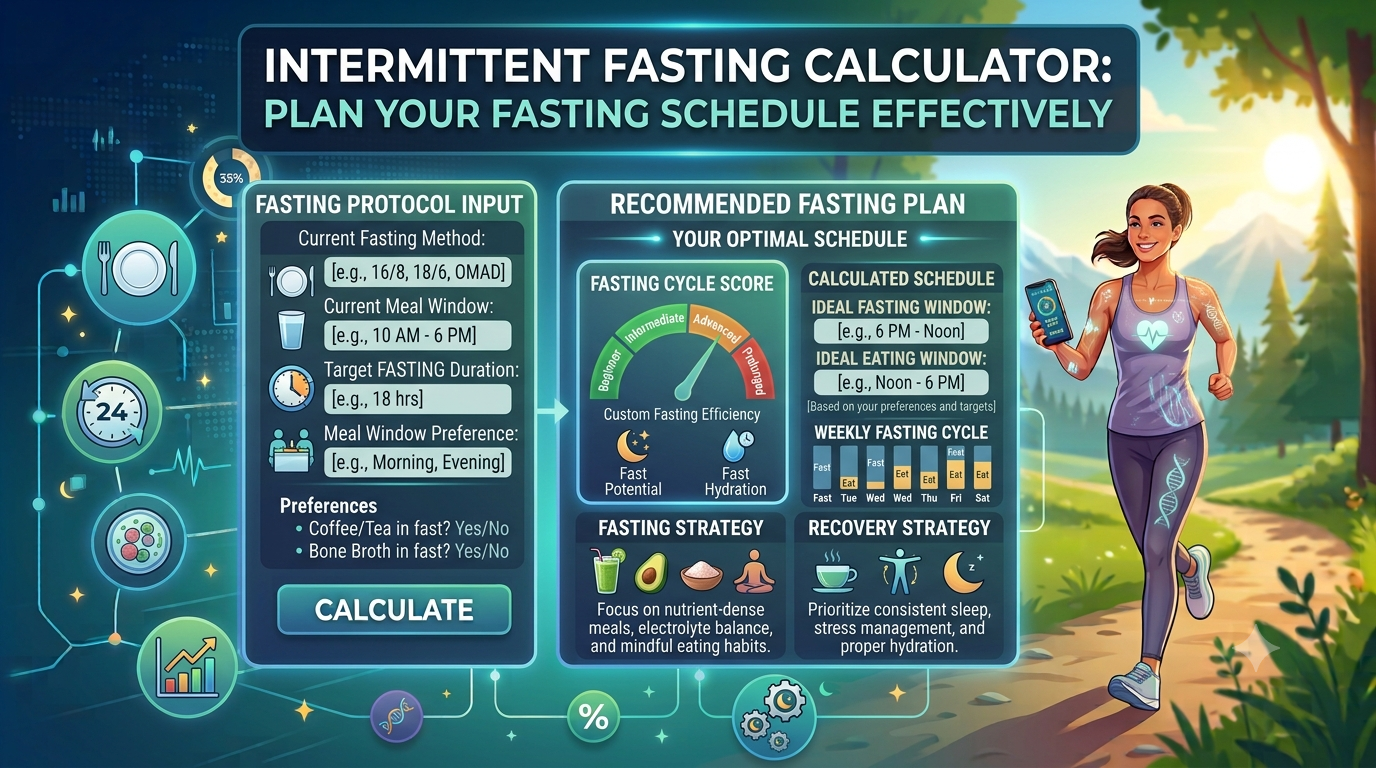
That’s when I started using an intermittent fasting calculator, and things finally became structured instead of random.
The mistake I kept repeating without noticing
My early approach to intermittent fasting looked like this:
- Skip breakfast sometimes
- Eat lunch late
- Stop eating “whenever I remember”
- Call it fasting
It sounded like fasting, but it wasn’t consistent enough to create real results.
The biggest problem wasn’t discipline—it was lack of structure.
And that’s exactly where a fasting calculator helps.
What an intermittent fasting calculator actually does
An intermittent fasting calculator helps you:
- Choose a fasting method (like 16:8, 18:6, 14:10, etc.)
- Set consistent eating windows
- Align fasting hours with your lifestyle
- Plan start and end times for meals
Instead of guessing every day, it gives you a fixed schedule.
Think of it like a timetable for your eating habits.
My first time using a fasting calculator
The first time I used one online, I expected something complicated.
But it was surprisingly simple.
I entered:
- Wake-up time
- Sleep time
- Preferred meal times
- Fasting method (I chose 16:8)
It generated a clean daily schedule.
For the first time, I wasn’t guessing when to eat or fast.
And honestly, that alone made the process feel easier.
Why intermittent fasting often fails for beginners
From my own experience and conversations with others, most people struggle with fasting because:
- No fixed schedule
- Inconsistent eating windows
- Overeating after fasting
- Skipping hydration
- Expecting fast results
The concept is simple, but execution becomes messy without planning.
That’s why a calculator isn’t just helpful—it adds structure.
How an intermittent fasting calculator works
Most calculators use basic inputs like:
- Age
- Weight
- Activity level
- Sleep schedule
- Fasting goal (fat loss, maintenance, etc.)
Then they suggest:
1. Fasting window
Example: 16 hours fasting
2. Eating window
Example: 8-hour eating period
3. Meal timing
Example: 12 PM to 8 PM eating window
4. Optional adjustments
- Workout timing
- Hydration reminders
- Meal spacing
It turns general fasting rules into a personalized routine.
Tools I actually used during fasting
I didn’t rely on just one thing. I kept it simple:
- Zero app (fasting tracker)
- Google Calendar (meal scheduling)
- MyFitnessPal (food tracking during eating window)
- Water reminder apps
- Basic stopwatch timer
Nothing fancy—just consistency-focused tools.
How I started using a fasting calculator properly
Here’s the process that actually worked for me:
Step 1: Choose a realistic fasting method
I started with 14:10 before moving to 16:8.
Jumping straight into long fasts didn’t work for me.
Step 2: Set fixed eating times
Example:
- First meal: 12 PM
- Last meal: 8 PM
No guessing daily.
Step 3: Match it with my lifestyle
I made sure fasting didn’t clash with work or energy levels.
Step 4: Stay hydrated during fasting
This made a huge difference in how I felt.
Step 5: Track consistency, not perfection
Missing one day doesn’t matter—breaking patterns does.
Real-life example that made it click
Let’s compare two approaches:
Person A (no structure)
- Skips meals randomly
- Eats late at night sometimes
- No fixed fasting hours
- Overeats after fasting
Person B (uses fasting calculator)
- Follows 16:8 consistently
- Eats between fixed hours
- Maintains hydration
- Keeps routine stable
Even if both are doing “intermittent fasting,” only one is truly consistent.
And consistency is what creates results.
Common mistakes people make
I’ve made most of these myself:
Mistake 1: Changing fasting windows daily
Your body needs routine.
Mistake 2: Overeating during eating window
Fasting doesn’t cancel calories.
Mistake 3: Ignoring hydration
Many people mistake thirst for hunger.
Mistake 4: Starting with extreme fasting
Jumping to 20:4 too early leads to burnout.
Mistake 5: Expecting instant results
Fasting is a long-term habit, not a quick fix.
What changed after I used a fasting calculator
Once I followed a structured plan, I noticed:
- Less confusion about meal timing
- Reduced late-night snacking
- More stable energy levels
- Better control over eating habits
- Easier consistency over weeks
But the biggest change was mental clarity.
I stopped thinking about fasting all day and just followed a routine.
Why structure matters more than intensity
One thing I learned the hard way:
Fasting isn’t about how long you can go without food occasionally.
It’s about how consistently you follow a pattern.
A structured 16:8 plan is far more effective than random 18-hour fasts followed by overeating.
A simple way to understand fasting calculators
Here’s how I explain it now:
An intermittent fasting calculator is like a calendar for your eating habits.
It doesn’t force discipline—it removes decision fatigue.
Instead of asking “When should I eat today?”, you already know.
When an intermittent fasting calculator is most useful
It helps especially if you:
- Are new to intermittent fasting
- Struggle with consistency
- Have irregular daily schedules
- Want structured fat-loss planning
- Keep forgetting fasting timings
Even experienced users benefit from routine tracking.
Final thoughts
An intermittent fasting calculator didn’t make fasting easier because it changed the rules—it made the rules clear.
Before using it, I kept switching between different schedules and wondering why I wasn’t seeing consistency. After using it, everything became predictable.
And that predictability is what makes intermittent fasting actually sustainable.
It’s not about pushing your body harder—it’s about giving it a rhythm it can adapt to.
Once that rhythm is in place, fasting stops feeling like a struggle and starts feeling like a routine you don’t have to think twice about.
Suggested outbound reference: For evidence-based information on intermittent fasting and metabolic health, see the official https://www.health.harvard.edu/blog/intermittent-fasting.