A few years ago, I had one of those days where everything felt off.
By mid-afternoon, I had a headache, my energy levels had crashed, and I couldn't focus on even simple tasks. My first thought was that I needed more coffee.
So I grabbed another cup.
A couple of hours later, I felt even worse.
When I mentioned it to a friend who works in fitness, he asked a surprisingly simple question:
"How much water have you had today?"
I thought about it for a moment and realized the answer was embarrassingly small.
One cup in the morning.
That was it.
That experience pushed me to start paying attention to hydration, and eventually I began using a water intake calculator. What I discovered was that my daily water needs were very different from the generic "8 glasses a day" advice I'd heard for years.
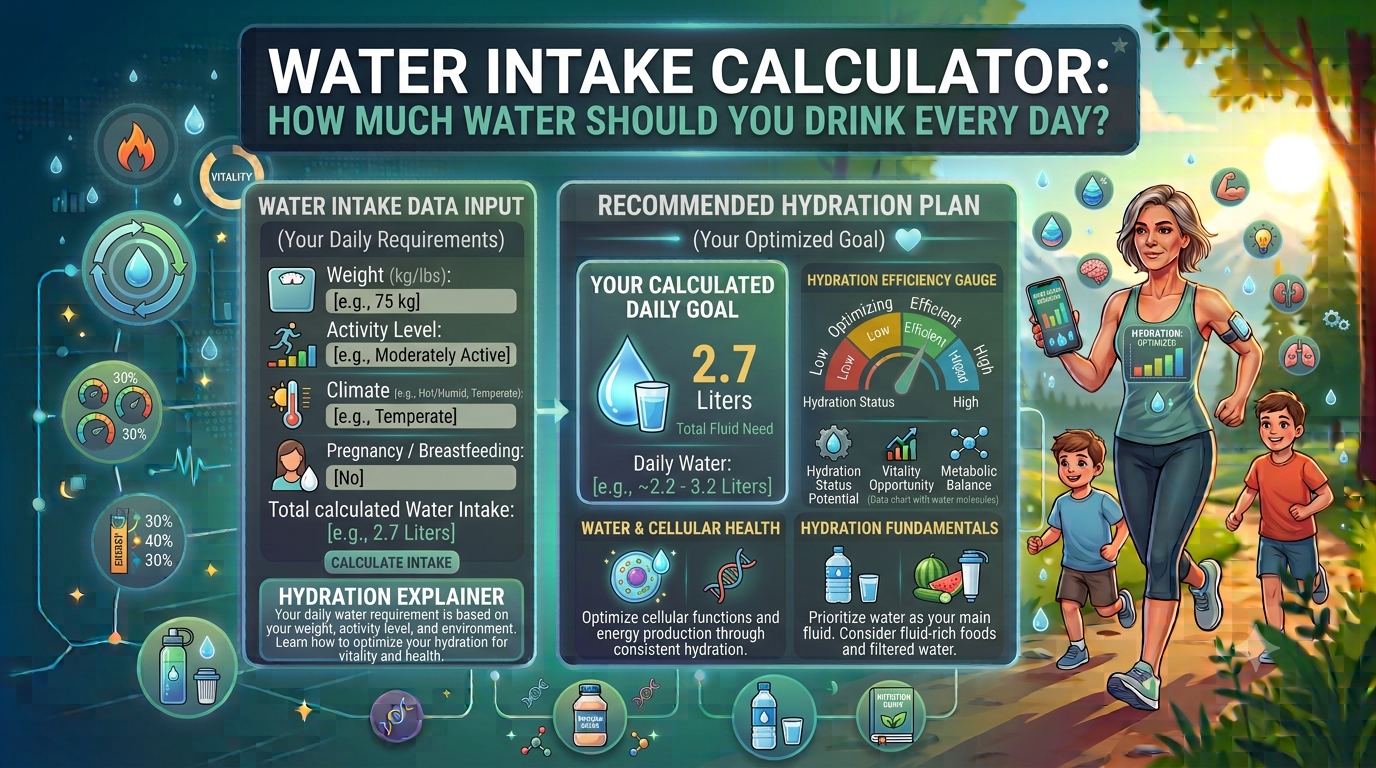
If you've ever wondered how much water you should actually drink, a water intake calculator can provide a much more personalized answer.
Why I Stopped Following the "8 Glasses a Day" Rule
For years, I believed everyone needed exactly eight glasses of water every day.
It's simple advice and easy to remember.
The problem is that people aren't identical.
A person who weighs 120 pounds and works in an air-conditioned office likely has different hydration needs than someone who weighs 220 pounds and spends hours exercising outdoors.
Factors that affect water requirements include:
- Body weight
- Activity level
- Climate
- Age
- Diet
- Health conditions
That's why a one-size-fits-all recommendation doesn't always work.
A water intake calculator takes personal factors into account and provides a more realistic estimate.
What Is a Water Intake Calculator?
A water intake calculator is a tool that estimates how much water you should consume daily based on information such as:
- Weight
- Activity level
- Gender
- Climate conditions
- Exercise habits
The calculator provides an estimated daily water target, usually in:
- Liters
- Milliliters
- Cups
- Fluid ounces
The goal isn't to create a strict rulebook.
It's to provide a starting point that helps you stay properly hydrated.
My First Experience Using One
The first calculator I tried recommended significantly more water than I was drinking.
Honestly, I thought the number looked excessive.
But after gradually increasing my intake, I noticed several changes:
- Fewer afternoon headaches
- Better workout performance
- Improved concentration
- Reduced feelings of fatigue
The difference wasn't dramatic overnight.
But after a few weeks, proper hydration became one of the simplest health habits I'd ever adopted.
Why Water Matters More Than Most People Realize
Water supports countless functions throughout the body.
It helps with:
- Temperature regulation
- Digestion
- Nutrient transport
- Joint lubrication
- Physical performance
- Cognitive function
Even mild dehydration can affect how you feel during the day.
One thing I learned is that thirst isn't always the first warning sign.
Sometimes symptoms appear as:
- Fatigue
- Difficulty concentrating
- Dry mouth
- Headaches
- Reduced exercise performance
Many people experience these symptoms without immediately connecting them to hydration.
How a Water Intake Calculator Works
Most calculators begin with your body weight.
From there, adjustments may be made based on:
Activity Level
Exercise increases fluid loss through sweat.
The more active you are, the more water you generally need.
Climate
Hot and humid environments often increase hydration requirements.
Living in a warm climate can significantly affect daily water needs.
Age
Hydration requirements may vary slightly across different life stages.
Lifestyle Habits
Factors such as physical work, outdoor activities, and exercise frequency can influence recommendations.
How to Use a Water Intake Calculator Correctly
Using one is straightforward, but accuracy matters.
Step 1: Enter Your Current Weight
Most calculators use body weight as the foundation of their estimate.
Use your current weight for the most relevant result.
Step 2: Select Your Activity Level Honestly
This is one area where many people accidentally overestimate.
If you exercise occasionally but spend most of the day sitting, choose an activity level that reflects your overall lifestyle.
Step 3: Consider Climate Conditions
Some calculators ask whether you live in a hot environment.
If you spend a lot of time outdoors in warm weather, this can increase your estimated needs.
Step 4: Review Your Recommendation
The result will typically provide a suggested daily water intake.
Remember that it's an estimate rather than a medical prescription.
Step 5: Track Your Intake
This was the step that helped me most.
Without tracking, it's surprisingly easy to underestimate how much—or how little—you drink.
Helpful Tools for Tracking Water Intake
Technology makes hydration tracking much easier than it used to be.
Here are a few tools I've personally tried.
Water Tracking Apps
Many apps allow you to:
- Log water intake
- Set reminders
- Track progress
- Create hydration goals
Simple notifications can be surprisingly effective.
Smart Water Bottles
Some bottles automatically track consumption and sync with mobile apps.
While not necessary, they can be useful for people who enjoy data and automation.
Fitness Watches
Many fitness wearables include hydration reminders and activity tracking that can help support hydration habits.
Simple Marked Water Bottles
Honestly, one of the most effective solutions I've used was a large reusable bottle with measurement markings.
No app required.
Just visual progress throughout the day.
Real-Life Example
Let's imagine three different people.
Sarah
Sarah works remotely and spends most of her day indoors.
Her hydration needs are moderate and relatively stable.
Ahmed
Ahmed works outdoors in warm weather.
He loses more fluids through sweat and may require significantly more water.
David
David trains at the gym five days per week.
His exercise routine increases daily hydration requirements.
Even though all three people are healthy adults, their water needs differ.
That's exactly why personalized estimates are useful.
Common Mistakes People Make
After paying attention to hydration for several years, I've noticed several mistakes that are surprisingly common.
Waiting Until You're Thirsty
Thirst can be a useful signal, but it's not always the earliest one.
By the time you're very thirsty, your body may already be experiencing mild dehydration.
Drinking Large Amounts at Once
When I first tried increasing water intake, I drank huge amounts in a short period.
That quickly became uncomfortable.
Spreading intake throughout the day works much better.
Ignoring Activity Levels
Workout days often require more hydration than rest days.
Adjusting intake accordingly can make a noticeable difference.
Forgetting Water From Food
Many foods contribute to overall hydration.
Examples include:
- Fruits
- Vegetables
- Soups
- Yogurt
While water remains important, food can also support hydration.
Assuming Everyone Needs the Same Amount
This is probably the most common mistake.
Hydration needs vary widely between individuals.
Signs You May Need More Water
Although hydration needs differ, some common signs may indicate inadequate fluid intake.
These can include:
- Dark-colored urine
- Dry mouth
- Fatigue
- Headaches
- Dizziness
- Reduced concentration
If symptoms persist, it's important to speak with a healthcare professional.
What I Learned After Tracking Water Intake
One of the most surprising discoveries was how often I confused dehydration with other issues.
I blamed:
- Fatigue on poor sleep
- Headaches on stress
- Lack of focus on workload
Sometimes those factors played a role.
But in many cases, I simply wasn't drinking enough water.
Once hydration became a consistent habit, I noticed improvements that extended far beyond physical performance.
Creating a Sustainable Hydration Habit
The biggest mistake people make is trying to overhaul everything overnight.
What worked for me was simple:
- Start the morning with water.
- Keep a bottle nearby.
- Drink consistently throughout the day.
- Monitor progress without obsessing over it.
Small habits tend to last longer than dramatic changes.
When a Water Intake Calculator Is Most Helpful
A calculator can be especially useful if you:
- Rarely track hydration
- Exercise regularly
- Live in a warm climate
- Experience frequent dehydration symptoms
- Want a personalized estimate instead of generic advice
Even if the number isn't perfect, it usually provides a much better starting point than guessing.
Final Thoughts
Using a water intake calculator helped me realize that hydration isn't just about avoiding thirst. It's about supporting overall health, energy levels, and daily performance.
Before I started tracking water intake, I assumed I was drinking enough simply because I had water occasionally throughout the day. The reality was very different. Once I understood my estimated hydration needs, it became easier to build habits that actually supported how I felt.
A water intake calculator won't replace common sense or medical advice, but it can provide a useful benchmark. Combined with regular hydration habits and awareness of your body's signals, it becomes a practical tool for improving daily wellness.
Sometimes the simplest health improvements come from paying attention to basics. Drinking enough water is one of those basics that can have a surprisingly large impact on how you feel every day.
Suggested outbound reference: Readers who want evidence-based hydration guidance can visit the official U.S. Centers for Disease Control and Prevention (CDC) – Water and Health Resource.
Written & Reviewed by Dr. Zil e Norain Tanveer
MBBS | Health & Wellness Expert |
Dr. Zil e Norain Tanveer is a qualified medical professional with a focus on preventive healthcare, nutrition, and wellness education. She reviews all health content on HealthCalc to ensure accuracy and reliability for every reader.