A few years ago, I was doing what many people do when they decide to get healthier: working hard but not really knowing if my efforts were paying off.
I was going to the gym three or four times a week. I was trying different meal plans. I even bought a fitness tracker because everyone seemed to have one.
But there was one problem.
I was making most of my decisions based on guesses.
I guessed how many calories I needed.
I guessed whether I was drinking enough water.
I guessed if my weight was healthy.
Sometimes those guesses were close. Most of the time, they weren't.
Everything changed when I started using health calculators.
At first, I thought they were just simple online tools with little value. But after using them consistently, I realized they helped answer questions that had been confusing me for years.
The best part was that most of them took less than a minute to use.
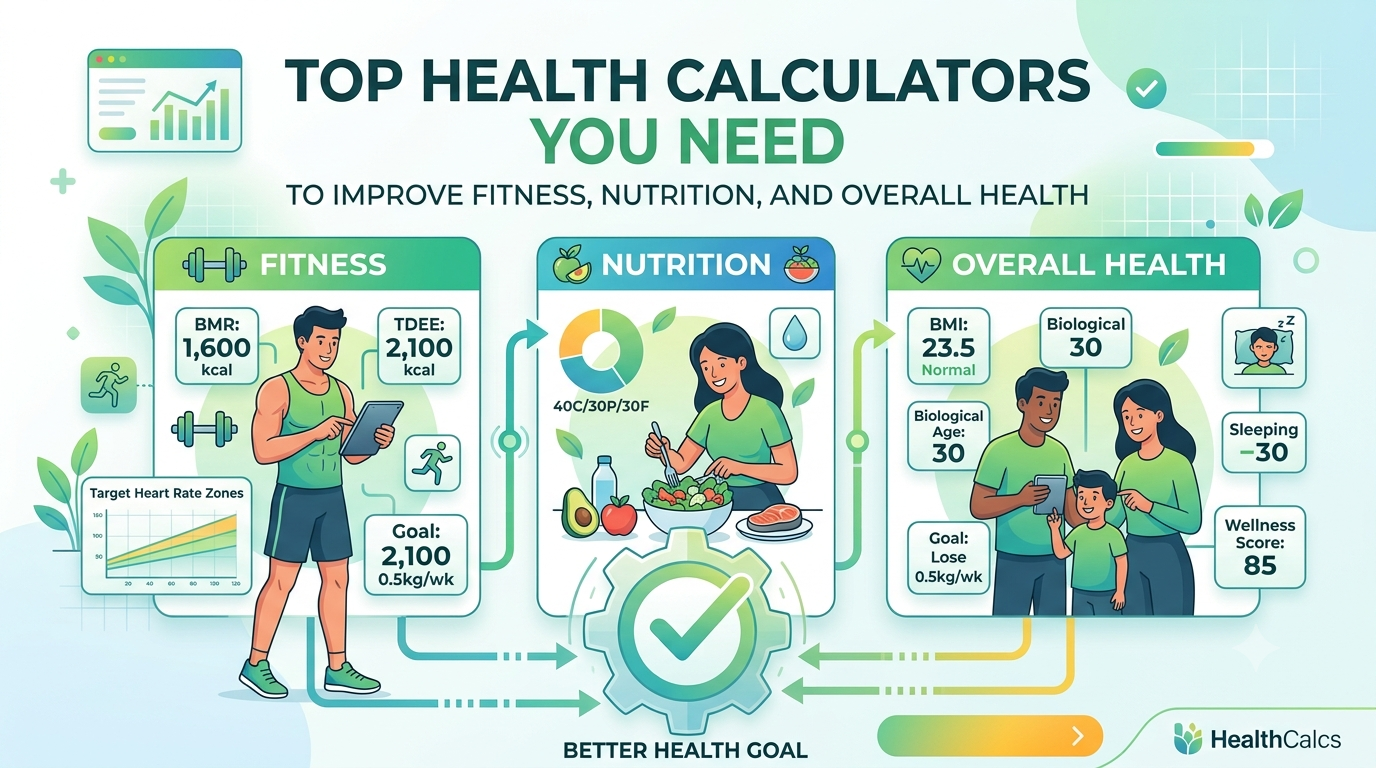
If you're trying to improve your fitness, nutrition, or overall health, these are the calculators I believe everyone should know about.
Why Health Calculators Matter
One lesson I've learned over the years is that it's difficult to improve something you don't measure.
Imagine trying to save money without checking your bank account.
Or trying to improve your grades without looking at test results.
Health works the same way.
Health calculators provide useful information that can help guide your decisions.
They're not replacements for doctors, dietitians, or professional advice. But they can help you better understand your body and make more informed choices.
1. BMI Calculator
The first health calculator I ever used was a BMI calculator.
BMI stands for Body Mass Index.
It uses your height and weight to estimate whether your body weight falls within a general healthy range.
When I calculated mine for the first time, I was surprised by the result.
I thought I was comfortably within a healthy weight range.
The calculator suggested I was closer to being overweight than I realized.
That wake-up call motivated me to take my health more seriously.
Why It Helps
A BMI calculator can:
- Provide a quick health snapshot
- Identify potential weight concerns
- Help track long-term changes
What I Learned
BMI isn't perfect.
It doesn't distinguish between muscle and fat.
Someone with significant muscle mass may have a higher BMI despite being very healthy.
I use BMI as a starting point, not a final verdict.
2. Calorie Calculator
If I had to recommend only one calculator, this would probably be it.
For years, I guessed my calorie needs.
Sometimes I ate too much.
Sometimes I ate too little.
Neither approach produced consistent results.
A calorie calculator estimates your daily calorie requirements based on:
- Age
- Height
- Weight
- Gender
- Activity level
The first time I used one, I discovered my calorie needs were much higher than I expected.
That explained why my previous diets felt impossible to maintain.
Why It Helps
A calorie calculator can support:
- Weight loss goals
- Weight maintenance
- Muscle-building plans
- Nutrition planning
3. Body Fat Percentage Calculator
The scale only tells you how much you weigh.
It doesn't tell you what that weight consists of.
This became obvious during one period when my weight barely changed despite months of consistent training.
I assumed I wasn't making progress.
Then I checked my body fat percentage.
I had lost body fat and gained muscle.
The scale simply didn't reveal the full picture.
Why It Helps
Body fat calculators provide a better understanding of:
- Body composition
- Fitness progress
- Fat-loss success
4. Lean Body Mass Calculator
This calculator completely changed how I evaluate fitness results.
Lean body mass includes:
- Muscle
- Bone
- Water
- Organs
Basically, everything except body fat.
Once I started tracking lean body mass, I stopped obsessing over the scale.
I became more interested in maintaining and building muscle while improving overall health.
Why It Helps
It can help with:
- Strength training goals
- Nutrition planning
- Fitness assessments
5. Basal Metabolic Rate (BMR) Calculator
I wish I had discovered this calculator years earlier.
Your BMR estimates the calories your body burns at complete rest.
When I calculated mine for the first time, I realized I had been following diets that were far too restrictive.
No wonder I constantly felt tired.
Understanding your BMR provides valuable insight into your body's basic energy requirements.
Why It Helps
Useful for:
- Calorie planning
- Weight management
- Sustainable dieting
6. Water Intake Calculator
Hydration seems simple.
Drink water when you're thirsty, right?
That's exactly what I thought.
Then I tracked my daily water intake.
The results weren't impressive.
Many days I was consuming far less water than I assumed.
A water intake calculator helped me establish a realistic hydration goal.
Why It Helps
Proper hydration can support:
- Energy levels
- Exercise performance
- Concentration
- Recovery
7. Sleep Calculator
I used to focus entirely on sleep duration.
If I slept eight hours, I assumed everything was fine.
A sleep calculator taught me that timing matters too.
These calculators estimate ideal bedtimes and wake-up times based on average sleep cycles.
After adjusting my schedule, I noticed I woke up feeling less groggy and more refreshed.
Why It Helps
Useful for:
- Better sleep quality
- Improved morning energy
- More consistent sleep habits
8. Heart Rate Zone Calculator
Once I started running regularly, this became one of my favorite tools.
Heart rate zone calculators estimate target heart rate ranges for different exercise intensities.
Instead of guessing whether my workout was challenging enough, I could train with more purpose.
Many devices now provide this information automatically.
Useful Devices
- Apple Watch
- Fitbit
- Garmin
- Polar fitness trackers
Why It Helps
Supports:
- Cardio training
- Endurance development
- Exercise efficiency
9. Waist-to-Height Ratio Calculator
This is one of the simplest calculators available.
All you need is:
- Your waist measurement
- Your height
That's it.
Despite being simple, it can provide useful insight into body fat distribution.
I personally find it more informative than weight alone.
Why It Helps
Can assist with:
- Health risk awareness
- Body composition tracking
- Long-term wellness monitoring
10. Biological Age Calculator
This calculator gave me one of the biggest reality checks I've ever received.
Your chronological age is how many years you've been alive.
Your biological age attempts to estimate how your body is aging based on health and lifestyle factors.
The first time I used one, my biological age was older than my actual age.
That result motivated me to improve:
- Sleep habits
- Nutrition
- Physical activity
- Stress management
Why It Helps
Provides insight into:
- Long-term health
- Lifestyle choices
- Overall wellness
How I Use These Calculators Today
Over time, I've developed a simple system.
I don't spend hours tracking every detail.
Instead, I focus on consistency.
Monthly Check-In
I review:
- Weight
- BMI
- Body fat percentage
- Waist measurement
Quarterly Review
I reassess:
- Calorie needs
- Activity level
- Fitness goals
Daily Habits
I monitor:
- Water intake
- Sleep quality
- Exercise consistency
This approach keeps me informed without becoming overwhelmed.
Common Mistakes People Make
I've personally made most of these mistakes.
Treating Calculators Like Medical Diagnoses
Health calculators provide estimates.
They aren't substitutes for professional healthcare advice.
Obsessing Over Every Number
Progress isn't determined by a single measurement.
Long-term trends matter more.
Using Only One Calculator
Health is complex.
Looking at multiple metrics provides a clearer picture.
Ignoring Healthy Habits
No calculator can replace:
- Good nutrition
- Regular exercise
- Quality sleep
- Stress management
The fundamentals still matter most.
Helpful Apps That Work Alongside Health Calculators
Several apps and devices have helped me make better use of calculator data.
MyFitnessPal
Useful for:
- Food tracking
- Calorie monitoring
- Nutrition planning
Fitbit
Great for:
- Activity tracking
- Sleep analysis
- Heart rate monitoring
Apple Health
Helpful for:
- Centralized health data
- Fitness tracking
- Progress monitoring
Garmin Connect
Excellent for:
- Endurance athletes
- Heart rate training
- Recovery tracking
A Good Place to Explore Health Calculators
If you're looking for a reliable collection of calculators covering fitness, nutrition, body composition, and wellness, I recommend checking out:
https://www.calculator.net/health-calculator.html
It's a useful resource for comparing different health metrics and learning more about how each calculator works.
The Biggest Lesson I Learned
When I first started improving my health, I spent a lot of time searching for perfect diets, ideal workout routines, and secret shortcuts.
What actually helped most was understanding my own numbers.
Health calculators gave me information I could use.
They helped me stop guessing and start making decisions based on data.
They didn't magically transform my health overnight.
What they did was provide clarity.
And when you're trying to improve your fitness, nutrition, and overall well-being, clarity can be one of the most valuable tools you have.
Sometimes better health starts with something surprisingly simple: taking sixty seconds to calculate where you stand today and using that knowledge to make smarter choices tomorrow.
Written & Reviewed by Dr. Zil e Norain Tanveer
MBBS | Health & Wellness Expert |
Dr. Zil e Norain Tanveer is a qualified medical professional with a focus on preventive healthcare, nutrition, and wellness education. She reviews all health content on HealthCalc to ensure accuracy and reliability for every reader.