A few years ago, I found myself staring at a nutrition label in a grocery store, completely confused.
I was trying to lose weight, improve my fitness, and generally make healthier choices. But every article I read seemed to offer different advice. One website said I needed 1,800 calories per day. Another suggested 2,400. One fitness app told me I was burning hundreds of calories during workouts, while another gave a completely different estimate.
The more information I consumed, the more overwhelmed I became.
What finally helped wasn't another diet plan or fitness challenge.
It was learning how to use health calculators.
At first, I assumed these tools were only for fitness enthusiasts or healthcare professionals. But once I started using them, I realized they could answer many of the questions I struggled with every day.
How many calories should I eat?
Am I getting enough sleep?
How much water do I actually need?
Is my weight in a healthy range?
Am I losing fat or just losing weight?
Health calculators gave me a clearer picture of my body and helped me make decisions based on data instead of guesswork.
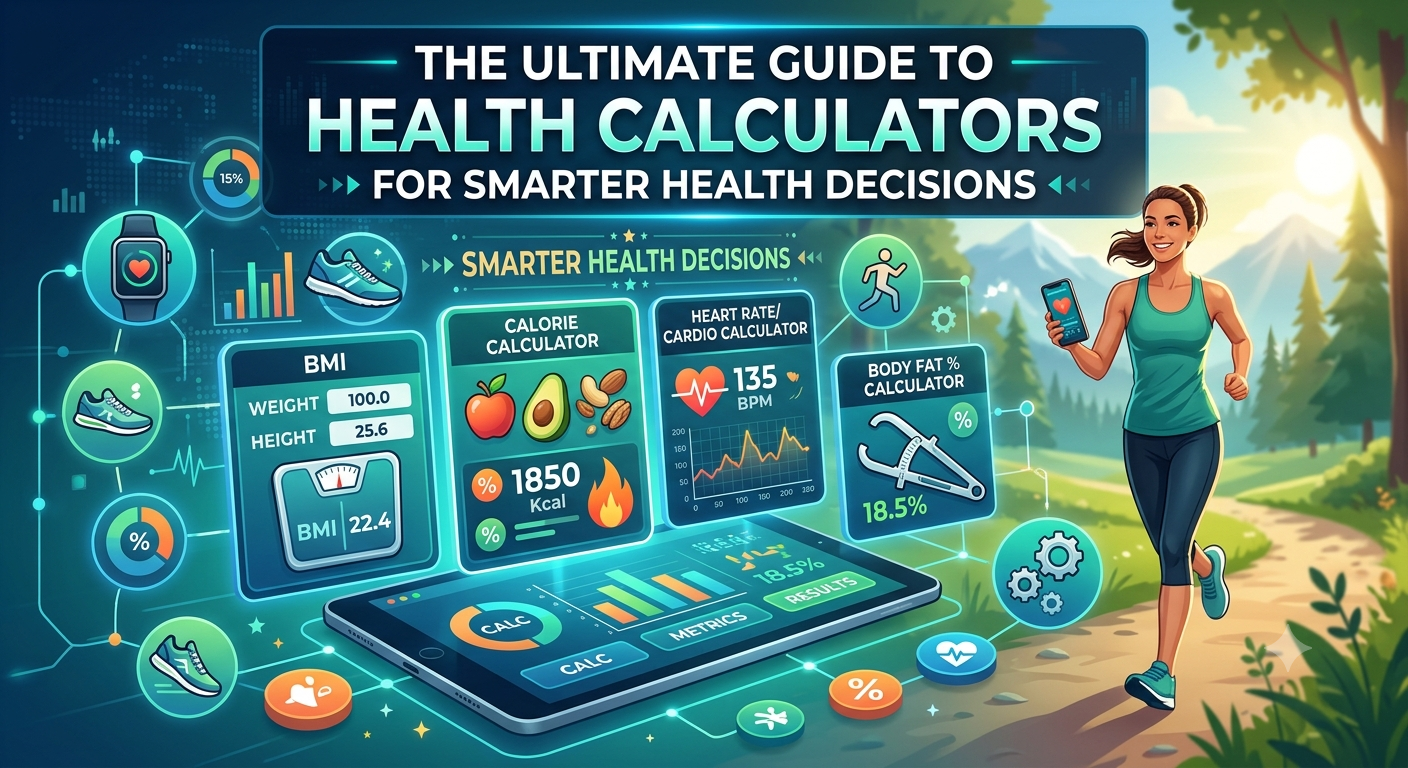
If you've ever felt confused by health advice, this guide will show you how health calculators can simplify things and help you make smarter choices.
Why Health Calculators Matter
One lesson I've learned through years of experimenting with fitness and nutrition is that most people make decisions based on assumptions.
I certainly did.
I assumed I was eating the right number of calories.
I assumed I was drinking enough water.
I assumed my sleep schedule was good enough.
The reality was very different.
Health calculators don't provide perfect answers, but they can offer useful estimates that help you understand where you currently stand.
Think of them as tools that help you make more informed decisions.
They're not replacements for medical advice, but they can provide valuable insights into your daily habits.
My Biggest Mistake: Tracking the Wrong Things
For a long time, I focused almost entirely on body weight.
Every morning, I stepped on the scale and judged my progress based on a single number.
That approach caused a lot of unnecessary frustration.
Some weeks the scale barely moved.
Other weeks it fluctuated for reasons that had nothing to do with body fat.
When I started using additional health calculators, I gained a much broader view of my health.
Instead of focusing on one measurement, I could see multiple factors working together.
That shift completely changed how I approached wellness.
The Most Useful Health Calculators I've Personally Used
Over the years, I've tested dozens of calculators.
Some became part of my routine.
Others I used once and never returned to.
These are the calculators I consistently find valuable.
1. Body Mass Index (BMI) Calculator
BMI is often criticized, and some of the criticism is valid.
It doesn't distinguish between muscle and fat.
However, I still think it's useful as a starting point.
A BMI calculator compares your weight and height to estimate whether your weight falls within a general healthy range.
I view it as a screening tool rather than a final answer.
It's especially helpful for identifying trends over time.
2. Calorie Calculator
This is probably the calculator I use most often.
A calorie calculator estimates how many calories your body needs daily.
When I first used one, I discovered I had been dramatically underestimating my calorie requirements.
That explained why previous diets felt unsustainable.
Knowing your estimated calorie needs can help with:
- Weight loss
- Weight maintenance
- Muscle gain
- Nutrition planning
3. Basal Metabolic Rate (BMR) Calculator
Your BMR represents the calories your body burns while at rest.
In simple terms, it's the energy required to keep your body functioning.
Learning my BMR helped me understand why extremely low-calorie diets left me exhausted.
My calorie intake had fallen below what my body needed for basic functions.
4. Lean Body Mass Calculator
This calculator changed how I evaluate fitness progress.
Lean body mass includes:
- Muscles
- Bones
- Organs
- Water
Everything except body fat.
During one fitness phase, my scale weight barely changed for months.
But my lean body mass increased while body fat decreased.
Without tracking this metric, I might have assumed my efforts weren't working.
5. Body Fat Percentage Calculator
The scale tells you how much you weigh.
Body fat percentage provides deeper insight into body composition.
When combined with weight measurements, body fat estimates can reveal whether changes are coming from fat, muscle, or both.
For anyone focused on fitness, this calculator can be incredibly useful.
6. Water Intake Calculator
Hydration is one of the most overlooked aspects of health.
For years, I simply drank water when I felt thirsty.
Then I started tracking my intake.
I quickly realized there were many days when I wasn't drinking nearly enough.
A water intake calculator estimates hydration needs based on:
- Weight
- Activity level
- Climate
- Exercise habits
It's a simple tool that can help improve daily habits.
7. Sleep Calculator
I used to believe that sleeping eight hours automatically guaranteed good rest.
Then I discovered sleep calculators.
These tools estimate ideal bedtimes and wake-up times based on average sleep cycles.
The first time I adjusted my schedule using a sleep calculator, I noticed I woke up feeling noticeably less groggy.
The difference wasn't dramatic overnight, but it became clear after several weeks.
8. Heart Rate Zone Calculator
Once I started running regularly, heart rate zones became surprisingly useful.
This calculator estimates training zones for different exercise intensities.
Instead of guessing how hard I should work during cardio sessions, I could train more strategically.
Most modern fitness watches now include this information automatically.
9. Waist-to-Height Ratio Calculator
This is one of the simplest calculators available.
All you need is:
- Your waist measurement
- Your height
Despite its simplicity, it can provide valuable information about body fat distribution.
I find it particularly useful because it requires minimal equipment.
10. Biological Age Calculator
This was one of the most eye-opening calculators I've ever tried.
A biological age calculator estimates how your body is aging compared to your actual age.
The first result I received wasn't exactly encouraging.
My biological age was older than my chronological age.
That motivated me to improve my sleep, exercise habits, and nutrition.
Several months later, many of my health markers improved.
How to Use Health Calculators Effectively
One thing I learned early is that calculators are only useful when you apply the information.
Here's the process that works best for me.
Step 1: Identify Your Goal
Start with a specific objective.
Examples include:
- Losing weight
- Building muscle
- Improving sleep
- Increasing fitness
- Improving hydration
A clear goal helps determine which calculators are most relevant.
Step 2: Gather Accurate Information
The quality of your results depends on the quality of your inputs.
Take accurate measurements whenever possible.
Examples include:
- Weight
- Height
- Waist circumference
- Activity level
- Sleep duration
Avoid guessing.
Step 3: Track Results Consistently
A single measurement provides limited value.
Tracking over weeks or months reveals meaningful patterns.
This is where many people see the greatest benefit.
Step 4: Make Small Adjustments
Health calculators often highlight areas for improvement.
Instead of changing everything at once, focus on one habit at a time.
Small changes are easier to maintain.
Tools and Apps That Pair Well With Health Calculators
Several apps and devices make health tracking easier.
I've personally used many of these.
MyFitnessPal
Helpful for:
- Calorie tracking
- Macronutrient monitoring
- Weight management
Fitbit
Useful for:
- Activity tracking
- Sleep monitoring
- Heart rate data
Apple Watch
Provides:
- Fitness metrics
- Activity trends
- Heart rate information
Garmin Devices
Excellent for:
- Endurance training
- Heart rate zones
- Recovery tracking
The calculators provide estimates.
These tools help track real-world behavior.
Together, they create a much clearer picture of health.
Common Mistakes People Make
I've made most of these mistakes myself.
Obsessing Over Numbers
Data should inform decisions, not create anxiety.
Use calculators as guides rather than scorecards.
Expecting Perfect Accuracy
Most health calculators provide estimates.
They're helpful, but they're not exact.
Ignoring Lifestyle Habits
No calculator can replace:
- Healthy eating
- Physical activity
- Quality sleep
- Stress management
The basics still matter most.
Comparing Results With Others
Everyone has different genetics, lifestyles, and health histories.
Your numbers should be compared with your own progress, not someone else's.
One Resource That Offers Multiple Health Calculators
If you're looking for a place to explore various health calculators in one location, I've found this resource particularly useful:
https://www.calculator.net/health-calculator.html
It includes a wide range of calculators related to fitness, nutrition, weight management, and general wellness.
What Health Calculators Taught Me
The biggest lesson wasn't about calories, body fat, or sleep cycles.
It was about awareness.
Before using health calculators, I relied heavily on assumptions.
Sometimes those assumptions were correct.
Often they weren't.
These tools helped me understand my habits more clearly and make decisions based on actual information rather than guesses.
They didn't transform my health overnight.
What they did was provide direction.
And when you're trying to improve your health, having clear direction can make a huge difference.
Whether your goal is losing weight, improving fitness, sleeping better, or simply understanding your body more clearly, health calculators can be a practical starting point. Used wisely, they can turn uncertainty into action and help you make smarter decisions one step at a time.
Written & Reviewed by Dr. Zil e Norain Tanveer
MBBS | Health & Wellness Expert |
Dr. Zil e Norain Tanveer is a qualified medical professional with a focus on preventive healthcare, nutrition, and wellness education. She reviews all health content on HealthCalc to ensure accuracy and reliability for every reader.