A few years ago, I thought I had a sleep problem.
No matter how long I stayed in bed, I woke up feeling exhausted. Some mornings, I felt like I had barely slept at all, even after spending eight or nine hours under the blanket. My alarm would go off, and hitting the snooze button became a daily habit.
At first, I blamed stress, work, and even my mattress.
Then I stumbled across a sleep calculator.
Honestly, I expected it to be another internet gimmick.
Instead, it completely changed how I looked at sleep.
What surprised me wasn't that I needed more sleep. It was that I needed better-timed sleep.
After experimenting for several weeks, I discovered that the time I went to bed mattered almost as much as the number of hours I slept. Once I started paying attention to sleep cycles and planned my bedtime accordingly, waking up became much easier.
If you've ever felt tired despite getting what should be enough sleep, a sleep calculator might help you understand why.
The Mistake Most People Make
For years, my nightly routine was simple.
I would look at the clock and think:
"I need seven hours of sleep."
If I had to wake up at 7:00 AM, I'd try to fall asleep around midnight.
Sounds reasonable, right?
The problem is that sleep doesn't work like an on-and-off switch.
Your body moves through different sleep stages throughout the night. These stages repeat in cycles that typically last around 90 minutes.
When your alarm wakes you during deep sleep, you often feel groggy and disoriented. That's the feeling many people experience when they wake up and immediately want to crawl back into bed.
A sleep calculator helps estimate bedtime and wake-up times based on these sleep cycles.
The goal isn't just sleeping longer.
The goal is waking up between cycles rather than in the middle of one.
What Is a Sleep Calculator?
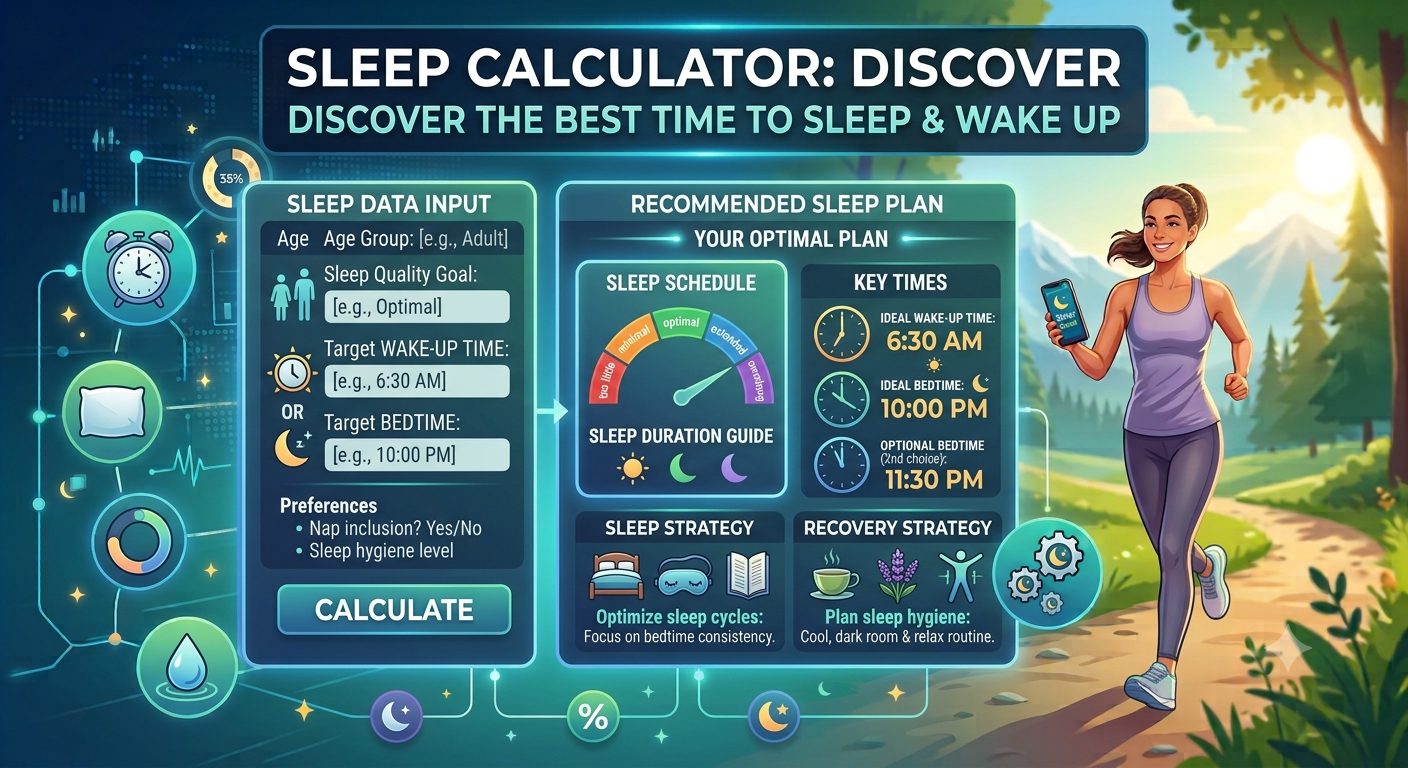
A sleep calculator is a simple tool that estimates the best times to go to sleep or wake up based on average sleep cycles.
Most calculators work by counting backward or forward in 90-minute intervals.
For example, if you need to wake up at 6:30 AM, the calculator may suggest bedtimes such as:
- 9:15 PM
- 10:45 PM
- 12:15 AM
These times are designed to help you complete full sleep cycles before waking.
Many calculators also include about 15 minutes to account for the time it takes most people to fall asleep.
While no calculator can predict your exact sleep needs, it provides a practical starting point.
My First Week Using a Sleep Calculator
The first thing I noticed was how different the recommended bedtimes looked compared to my normal schedule.
One evening I had to wake up at 6:00 AM.
Normally I would have stayed awake until midnight.
The calculator suggested going to sleep around 10:30 PM instead.
I decided to try it.
The next morning wasn't magical.
I wasn't bouncing out of bed with superhero energy.
But I did notice something important.
I felt less groggy.
After a few days, the difference became more obvious.
I still had occasional tired mornings, but I wasn't fighting my alarm every single day.
That small improvement was enough to keep me using the method.
Why Sleep Cycles Matter
Most adults move through several stages of sleep every night.
These include:
Light Sleep
This is the transition between being awake and asleep.
Your body begins relaxing, and your brain activity slows down.
Deep Sleep
This stage is important for physical recovery.
Muscles repair themselves, tissues recover, and the body performs many of its maintenance functions.
REM Sleep
REM stands for Rapid Eye Movement.
This stage is associated with dreaming, memory processing, and mental recovery.
A complete cycle through these stages usually lasts around 90 minutes.
Most people complete four to six cycles per night.
When your alarm interrupts deep sleep, waking up feels much harder.
That's why timing can make such a noticeable difference.
How to Use a Sleep Calculator Step by Step
If you've never used one before, here's the simple process I recommend.
Step 1: Decide Your Wake-Up Time
Start with the time you absolutely need to get out of bed.
For example:
- 6:00 AM
- 6:30 AM
- 7:00 AM
Be realistic.
Don't choose an ideal wake-up time that you rarely follow.
Step 2: Use a Sleep Calculator
Enter your wake-up time into a calculator.
One reliable option is the free calculator from the National Sleep Foundation:
https://www.thensf.org/sleep-calculator/
The calculator will suggest several bedtime options.
Step 3: Choose a Practical Bedtime
This is where many people fail.
The earliest recommended bedtime may not fit your lifestyle.
Choose one that you can consistently follow.
Consistency matters more than perfection.
Step 4: Create a Wind-Down Routine
A calculator only helps if you actually fall asleep.
I learned this lesson the hard way.
For weeks, I technically went to bed on time but spent another hour scrolling social media.
Now I start winding down about 30 minutes before bedtime by:
- Dimming lights
- Putting my phone away
- Reading a book
- Avoiding work emails
The difference has been noticeable.
Step 5: Track How You Feel
Pay attention to:
- Morning energy
- Afternoon fatigue
- Mood
- Focus
- Productivity
These signals often tell you whether your sleep schedule is working.
Tools That Help Track Sleep
I've tested several tools over the years, and some are surprisingly useful.
Fitbit
Fitbit devices provide sleep scores and estimates of different sleep stages.
While not perfect, they offer valuable trends over time.
Apple Watch
The Apple Watch tracks sleep duration and can integrate with several sleep-focused apps.
Garmin Watches
Garmin devices often provide detailed sleep insights and recovery metrics.
Sleep Cycle App
The Sleep Cycle app became one of my favorites.
It uses your phone's sensors to monitor sleep patterns and can wake you during lighter sleep periods.
Many users find this gentler than a traditional alarm.
Real-Life Example: Why Timing Beats Extra Sleep
One of my friends insisted he needed at least nine hours of sleep every night.
Yet he was constantly tired.
After discussing his routine, we discovered something interesting.
His bedtime changed dramatically every night.
Sometimes 10 PM.
Sometimes 1 AM.
Sometimes even later.
He started using a sleep calculator and focused on consistency rather than sleeping longer.
Within a few weeks, he reported feeling more refreshed despite actually spending slightly fewer hours in bed.
The regular schedule seemed to help his body establish a more predictable rhythm.
Common Sleep Calculator Mistakes
Expecting Instant Results
Many people try it for one night and give up.
Your body often needs several days or even weeks to adjust.
Ignoring Sleep Quality
A calculator cannot fix:
- Stress
- Anxiety
- Noise
- Poor sleep environment
These factors still matter.
Using Your Phone Until Midnight
This was my biggest mistake.
I would proudly set the perfect bedtime and then spend an hour watching videos.
A sleep calculator works best when paired with healthy bedtime habits.
Sleeping In Every Weekend
Large differences between weekday and weekend schedules can disrupt your sleep rhythm.
Try to keep wake-up times relatively consistent.
Obsessing Over Numbers
Sleep calculators provide estimates.
They are guides, not strict rules.
Use them as a tool, not as something to stress over.
Tips That Improved My Sleep the Most
Out of everything I've tried, these habits delivered the biggest improvements.
Keep a Consistent Wake-Up Time
Even on weekends, I try not to vary by more than an hour.
Get Morning Sunlight
Spending time outdoors shortly after waking helps support the body's natural sleep-wake cycle.
Reduce Caffeine Later in the Day
I used to drink coffee in the late afternoon.
Once I stopped, falling asleep became easier.
Keep the Bedroom Cool
A slightly cooler room often helps me fall asleep faster and stay asleep longer.
Limit Bright Screens Before Bed
This simple change made a bigger difference than many expensive sleep products.
When a Sleep Calculator Isn't Enough
Sometimes tiredness isn't caused by poor scheduling alone.
If you're consistently exhausted despite getting adequate sleep, it may be worth discussing it with a healthcare professional.
Issues such as sleep apnea, chronic stress, certain medications, or other health conditions can affect sleep quality.
A calculator can improve timing, but it cannot diagnose medical problems.
The Biggest Lesson I Learned
What surprised me most wasn't the science behind sleep cycles.
It was how much better I felt from making small adjustments.
I didn't buy a new mattress.
I didn't spend hundreds of dollars on sleep gadgets.
I simply started paying attention to when I slept, not just how long I slept.
A sleep calculator won't transform your life overnight.
But it can help you build a schedule that works better with your body's natural rhythm.
For many people, including me, that small shift can make mornings easier, improve energy levels throughout the day, and reduce the constant feeling of running on empty.
Sometimes the difference between waking up refreshed and waking up exhausted comes down to timing more than you might think.