A few years ago, I thought I was eating plenty of protein.
My breakfast included cereal and milk. Lunch was usually a sandwich, and dinner often had some chicken or fish. Since I wasn't vegetarian and ate meat regularly, I assumed protein wasn't something I needed to think about.
Then I started tracking my food intake with a nutrition app.
The results surprised me.
On many days, I was consuming far less protein than I expected. Even though I exercised several times a week, my daily protein intake often fell short of what fitness experts recommended for someone with my activity level.
That discovery led me to use a protein intake calculator for the first time.
Instead of guessing, I finally had a clearer picture of how much protein my body actually needed. More importantly, I learned that protein requirements aren't the same for everyone.
If you've ever wondered whether you're eating enough protein—or perhaps too much—a protein intake calculator can help you find a personalized answer.
Why I Started Paying Attention to Protein
For years, I focused almost entirely on calories.
If I wanted to lose weight, I watched calories.
If I wanted to maintain weight, I watched calories.
What I didn't realize was that the quality and composition of those calories mattered too.
When I began exercising more regularly, I noticed a few issues:
- I felt hungry shortly after meals.
- Recovery after workouts seemed slow.
- I struggled to maintain muscle while losing weight.
After increasing my protein intake, I noticed several improvements.
I felt fuller for longer, my recovery improved, and it became easier to stick with my nutrition plan.
That's when I understood why protein receives so much attention in fitness and health discussions.
What Is a Protein Intake Calculator?
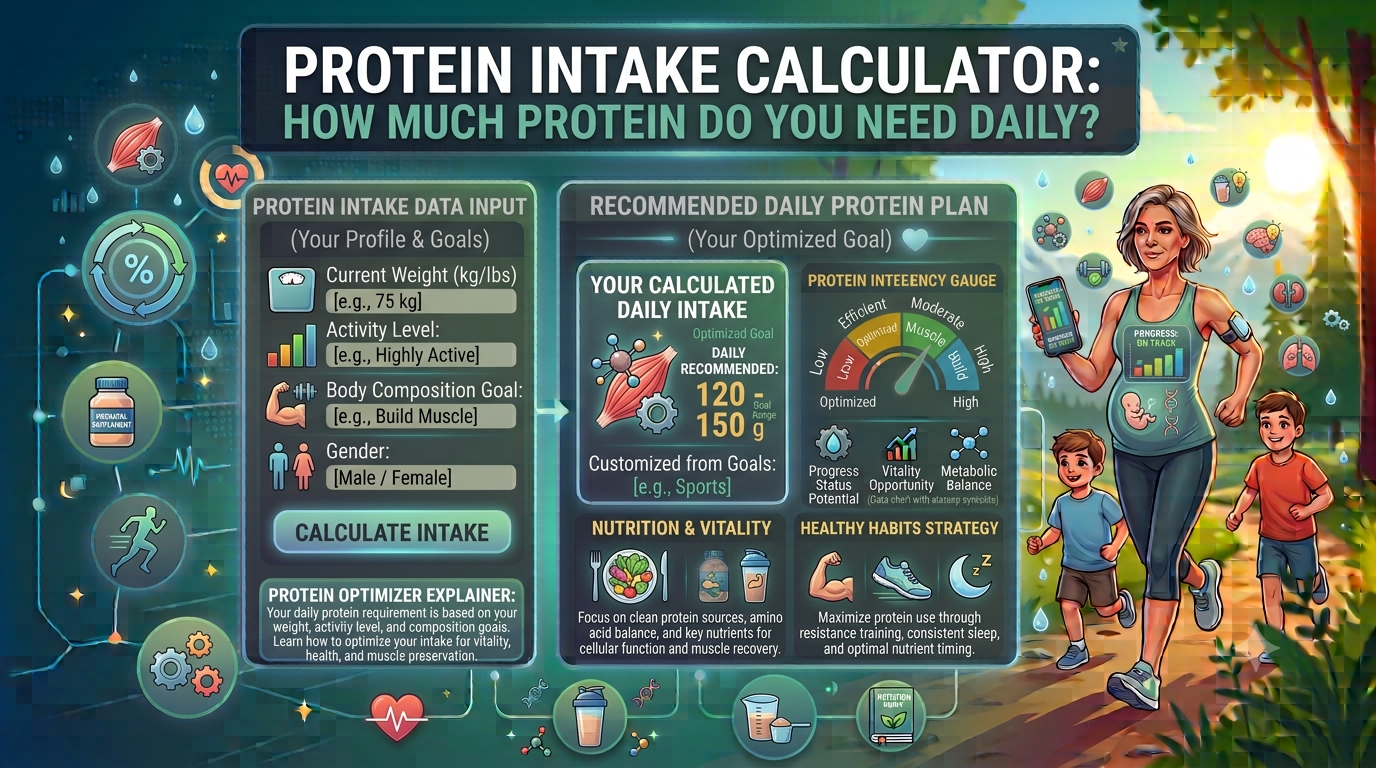
A protein intake calculator estimates how much protein you should consume each day based on factors such as:
- Body weight
- Age
- Gender
- Activity level
- Fitness goals
The calculator typically provides a recommended daily protein target in grams.
Instead of relying on generic advice, it gives a personalized estimate.
This is important because someone who spends most of the day sitting at a desk may have very different protein needs than someone training for a marathon or lifting weights several times a week.
Why Protein Matters
Protein plays a role in many essential functions throughout the body.
It helps support:
- Muscle maintenance
- Muscle growth
- Recovery after exercise
- Tissue repair
- Immune function
- Overall health
One thing I learned is that protein isn't just for bodybuilders.
Even people who aren't trying to build muscle need adequate protein to support normal body functions.
My First Experience With a Protein Calculator
The first calculator I used asked for:
- Weight
- Activity level
- Goal (maintenance, fat loss, muscle gain)
After entering my information, the recommended intake was much higher than I expected.
Initially, I thought there was no way I could eat that much protein.
But after tracking my meals for a few weeks, I realized it was achievable with some planning.
The biggest challenge wasn't eating more food.
It was choosing foods with better protein content.
How a Protein Intake Calculator Works
Most calculators estimate protein needs based on body weight.
They then adjust recommendations depending on:
Activity Level
The more physically active you are, the more protein your body may require.
Someone who exercises intensely several times per week typically needs more protein than someone with a sedentary lifestyle.
Fitness Goals
Protein needs can vary depending on whether you're trying to:
- Maintain weight
- Lose fat
- Build muscle
- Improve athletic performance
Age
Protein requirements may change as people get older.
Adequate protein becomes increasingly important for preserving muscle mass and strength.
How to Use a Protein Intake Calculator Correctly
A calculator is only helpful if the information you enter is accurate.
Here's the process that worked for me.
Step 1: Know Your Current Weight
Use a reliable scale and record your current weight.
Protein recommendations are often based directly on body weight.
Step 2: Choose Your Activity Level Honestly
This is where many people make mistakes.
I initially classified myself as "very active" because I exercised a few times per week.
In reality, I spent most of my day sitting at a desk.
Being realistic produces better recommendations.
Step 3: Select Your Goal
Ask yourself:
- Are you trying to maintain weight?
- Lose fat?
- Gain muscle?
Different goals often require different protein targets.
Step 4: Review Your Daily Target
The calculator will typically provide a recommended protein range.
Think of it as a guideline rather than a strict rule.
Step 5: Track Your Intake
This step made the biggest difference for me.
Without tracking, it's difficult to know whether you're actually reaching your target.
Tools That Help Track Protein Intake
Technology makes protein tracking much easier than it used to be.
Here are a few tools I've personally used.
Nutrition Tracking Apps
Food tracking apps allow you to:
- Log meals
- Scan barcodes
- Track protein grams
- Monitor daily nutrition goals
Many apps automatically calculate protein totals throughout the day.
Smart Food Scales
Digital kitchen scales help measure portions more accurately.
I was surprised by how often my estimated serving sizes differed from reality.
Fitness Watches
While they don't track protein directly, fitness wearables help monitor activity levels, which can influence nutrition planning.
Meal Planning Apps
Some meal-planning tools help create higher-protein meal plans based on personal goals.
Simple Ways to Increase Protein Intake
When I first saw my recommended protein target, I worried it would require a complete diet overhaul.
Fortunately, small changes made a significant difference.
Prioritize Protein at Breakfast
This was one of the biggest improvements I made.
Instead of a carbohydrate-heavy breakfast, I added more protein-rich options.
The difference in hunger levels throughout the day was noticeable.
Include Protein With Every Meal
Rather than trying to consume most of my protein at dinner, I spread it throughout the day.
This approach felt much easier.
Keep Convenient Options Available
Busy days often lead to poor nutrition decisions.
Having protein-rich snacks available helped me stay consistent.
Plan Ahead
A little meal planning reduced the likelihood of falling short of my protein goals.
Real-Life Example
Let's imagine three people using a protein intake calculator.
Sarah
Sarah walks regularly and wants to maintain her weight.
Her protein target is moderate and easy to reach through balanced meals.
Ahmed
Ahmed is trying to lose fat while preserving muscle.
The calculator recommends a higher protein intake to support that goal.
David
David strength trains four days per week.
His protein requirements are higher due to his training demands and muscle-building goals.
Each person receives a different recommendation because protein needs depend on individual circumstances.
Common Protein Tracking Mistakes
Over time, I've noticed several common mistakes that people make.
Assuming More Is Always Better
One of the biggest misconceptions is that consuming excessive amounts of protein automatically produces better results.
More isn't always necessary.
The goal is meeting your needs—not dramatically exceeding them.
Ignoring Overall Nutrition
Protein is important, but it's only one part of a balanced diet.
Carbohydrates, healthy fats, vitamins, and minerals matter too.
Not Reading Nutrition Labels
Many foods contain less protein than people assume.
Checking labels can prevent surprises.
Relying Entirely on Supplements
Protein powders can be convenient, but whole foods often provide additional nutrients that supplements don't.
Tracking Inconsistently
Occasional tracking can be helpful, but consistent tracking provides more useful insights.
What I Learned After Several Months
The most surprising lesson wasn't how much protein I needed.
It was how differently I felt when I consistently reached my target.
I noticed:
- Better workout recovery
- Improved satiety
- Easier weight management
- Greater consistency with nutrition habits
None of these changes happened overnight.
But over time, the benefits became noticeable.
When a Protein Intake Calculator Is Most Helpful
A protein calculator can be especially useful if you:
- Are starting a fitness program
- Want to build muscle
- Are trying to lose weight
- Need help planning meals
- Feel unsure about your current intake
Even if the estimate isn't perfect, it usually provides a much better starting point than guessing.
Protein Sources Worth Considering
You don't need expensive supplements to meet protein goals.
Common sources include:
- Eggs
- Chicken
- Fish
- Lean meats
- Greek yogurt
- Cottage cheese
- Beans
- Lentils
- Tofu
- Milk
- Nuts and seeds
A combination of different protein sources can help create a balanced diet.
Final Thoughts
Using a protein intake calculator helped me move beyond assumptions and understand what my body actually needed.
Before using one, I assumed I was eating enough protein simply because I included protein-rich foods in some meals. Once I started tracking, I discovered there was a significant gap between what I thought I was eating and what I was actually consuming.
A protein calculator won't transform your health on its own, but it can provide valuable guidance. Combined with consistent habits, balanced meals, and realistic expectations, it becomes a useful tool for anyone interested in improving fitness, supporting recovery, or managing body composition.
Sometimes the simplest improvements come from understanding the basics. Knowing your daily protein needs is one of those fundamentals that can make a surprisingly big difference over time.
Suggested outbound reference: Readers who want evidence-based guidance on protein and nutrition can visit the official Harvard T.H. Chan School of Public Health – Protein Guide.
Written & Reviewed by Dr. Zil e Norain Tanveer
MBBS | Health & Wellness Expert |
Dr. Zil e Norain Tanveer is a qualified medical professional with a focus on preventive healthcare, nutrition, and wellness education. She reviews all health content on HealthCalc to ensure accuracy and reliability for every reader.