The first time a close friend showed me her pregnancy tracking app, I noticed something that surprised me. Alongside baby development updates and appointment reminders, there was a pregnancy weight gain tracker.
She laughed and said, "I check this more than I check the baby's size."
At first, that sounded funny. But after talking with several expecting mothers over the years, I realized weight gain is one of the most common concerns during pregnancy.
Many women wonder:
- Am I gaining enough weight?
- Am I gaining too much?
- Is my baby's growth on track?
- What should I expect during each trimester?
The challenge is that pregnancy weight gain isn't always predictable. Some weeks bring noticeable changes, while others seem completely still. That's why many healthcare professionals recommend using a pregnancy weight gain calculator as a general tracking tool.
A calculator won't replace medical advice, but it can help expecting mothers understand what healthy weight gain often looks like throughout pregnancy.
Why Pregnancy Weight Gain Can Feel Confusing
One thing I've noticed from conversations with friends and family members is how much conflicting information exists about pregnancy weight gain.
One person says:
"You're eating for two."
Another says:
"Be careful not to gain too much."
Then social media adds even more opinions into the mix.
It's no wonder many expecting mothers feel uncertain.
The reality is that healthy pregnancy weight gain varies from person to person.
Factors such as:
- Pre-pregnancy weight
- Body Mass Index (BMI)
- Overall health
- Pregnancy type
- Individual medical circumstances
all influence recommendations.
That's why a pregnancy weight gain calculator can provide useful context instead of relying on random advice from the internet.
What Is a Pregnancy Weight Gain Calculator?
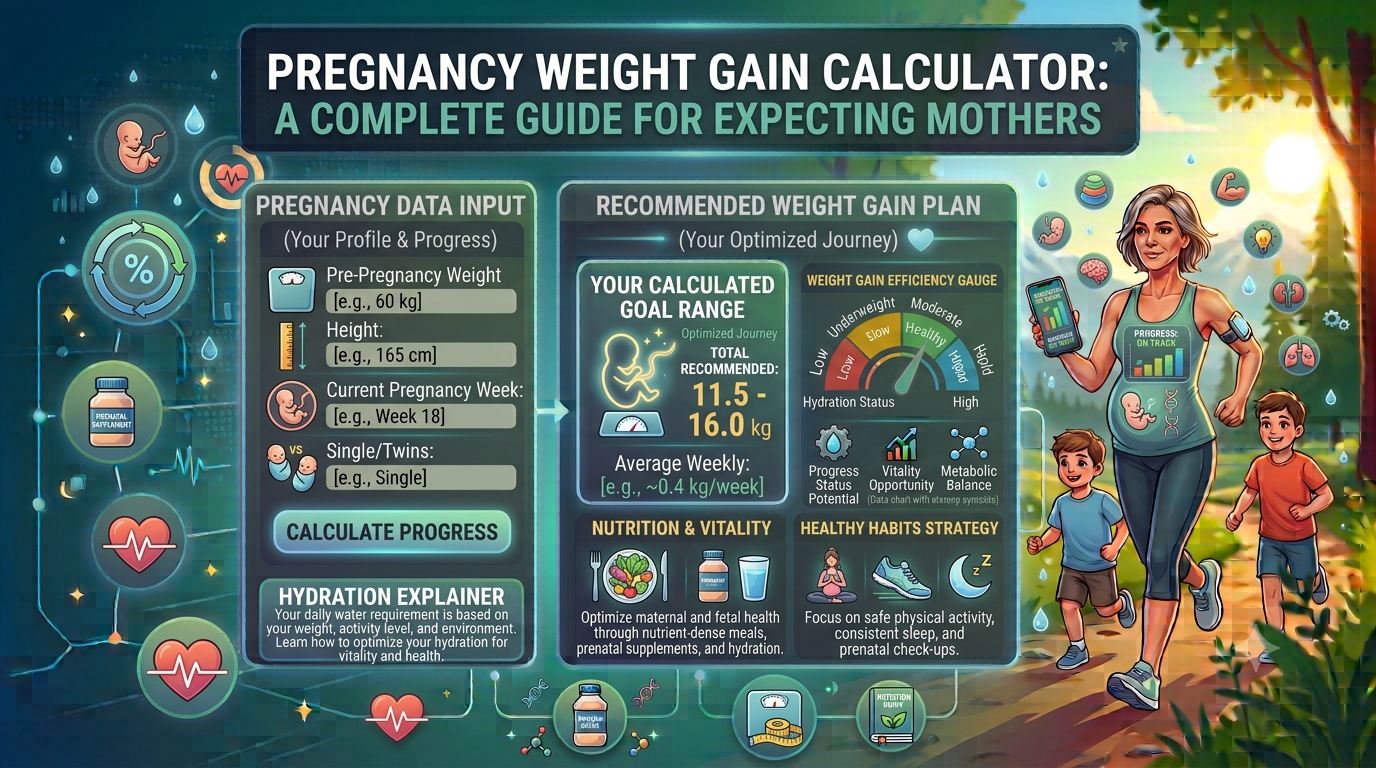
A pregnancy weight gain calculator estimates a recommended weight gain range during pregnancy based on:
- Pre-pregnancy weight
- Height
- Current week of pregnancy
- BMI before pregnancy
The calculator compares your information with established medical guidelines and provides an estimated healthy weight gain range.
The important word here is "range."
Healthy pregnancy weight gain isn't about hitting one exact number.
It's about staying within a reasonable range that supports both maternal health and fetal development.
My First Impression of These Calculators
The first time I explored one while helping a friend compare pregnancy tracking tools, I expected it to work like a typical weight-loss calculator.
Instead, it focused on gradual progress over time.
That made sense.
Pregnancy isn't about losing weight or maintaining the same weight. The body is supporting incredible changes, including:
- Baby growth
- Placenta development
- Increased blood volume
- Additional fluids
- Breast tissue growth
- Energy reserves
Seeing weight gain presented as a normal part of the process felt far more reassuring than simply watching numbers rise on a scale.
Why Tracking Pregnancy Weight Gain Matters
Pregnancy naturally involves weight gain, but tracking trends can help identify whether weight changes are generally aligning with recommended ranges.
Healthcare providers often monitor weight because it can provide useful information about:
- Maternal nutrition
- Baby growth
- Pregnancy progress
- Overall health
The goal isn't perfection.
The goal is awareness.
A calculator provides a visual framework that helps expecting mothers understand what typical weight gain patterns may look like throughout pregnancy.
How Pregnancy Weight Gain Usually Changes by Trimester
One lesson many first-time mothers discover is that weight gain doesn't happen at a constant rate.
First Trimester
Many women gain relatively little weight during the first trimester.
In fact, some experience nausea and food aversions that make eating difficult.
Others may gain a small amount early due to changes in appetite and fluid retention.
Second Trimester
This is often when weight gain becomes more noticeable.
Many women regain their appetite and experience more consistent growth.
Third Trimester
Weight gain generally continues as the baby grows rapidly during the final months.
The exact pattern varies from person to person, which is why calculators typically focus on ranges rather than strict weekly targets.
How to Use a Pregnancy Weight Gain Calculator
If you're using one for the first time, here's a simple process.
Step 1: Know Your Pre-Pregnancy Weight
Most calculators use your weight before pregnancy as the starting point.
If you don't remember the exact number, use the most accurate estimate available.
Step 2: Measure Your Height
Height helps determine your pre-pregnancy BMI.
This influences recommended weight gain ranges.
Step 3: Enter Your Pregnancy Week
Most calculators ask how far along you are.
This helps estimate whether weight gain is progressing within expected ranges for that stage of pregnancy.
Step 4: Review the Recommended Range
The calculator will usually display:
- Suggested total weight gain
- Current target range
- Estimated progress
Remember that these numbers are general guidelines rather than guarantees.
Step 5: Track Trends Over Time
One measurement doesn't tell the whole story.
Recording weight periodically allows you to monitor longer-term patterns.
Helpful Apps and Tools
Technology has made pregnancy tracking easier than ever.
Some tools that expecting mothers commonly use include:
Pregnancy Tracking Apps
Many apps combine:
- Baby development updates
- Weight tracking
- Appointment reminders
- Health information
Having everything in one place can make tracking more convenient.
Smart Scales
Smart scales automatically record weight data and create trend charts.
This eliminates the need for manual logging.
Digital Journals
Some mothers prefer simple note-taking apps to record:
- Weight changes
- Symptoms
- Appointments
- Questions for healthcare providers
The best tool is the one you'll actually use consistently.
Real-Life Example
Let's imagine two expecting mothers.
Sarah
Sarah starts pregnancy within a healthy BMI range.
Her calculator recommends a moderate amount of total weight gain.
She tracks monthly trends and discusses progress during prenatal visits.
Ayesha
Ayesha begins pregnancy with a different BMI.
Her calculator suggests a different target range.
Despite gaining weight at a different pace than Sarah, both may be progressing normally according to their individual circumstances.
This highlights an important point:
Healthy pregnancy weight gain is personalized.
Comparing yourself to someone else often creates unnecessary stress.
Common Mistakes to Avoid
After seeing how people use pregnancy tracking tools, I've noticed several common mistakes.
Obsessing Over Daily Changes
Weight naturally fluctuates.
Hydration, meal timing, and other factors can influence day-to-day measurements.
Focus on long-term trends instead.
Comparing With Friends
Every pregnancy is different.
Two women at the same stage of pregnancy may gain weight differently.
Ignoring Medical Advice
A calculator provides estimates.
Your healthcare provider understands your individual situation and should remain your primary source of guidance.
Assuming More Weight Gain Is Always Better
Pregnancy requires adequate nutrition, but healthy weight gain is about balance rather than excess.
Assuming Less Weight Gain Is Better
Some expecting mothers become anxious about gaining weight.
Pregnancy is one of the few times when weight gain serves an important biological purpose.
What a Pregnancy Weight Gain Calculator Doesn't Tell You
One thing I always remind people is that calculators have limitations.
They don't measure:
- Baby health directly
- Nutrient quality
- Fitness level
- Medical conditions
- Pregnancy complications
They're useful tools, but they don't replace professional prenatal care.
Think of them as navigation aids rather than final authorities.
Practical Tips for Healthy Pregnancy Weight Tracking
A few simple habits can make tracking easier.
Weigh Yourself Consistently
Try to:
- Use the same scale
- Measure at the same time of day
- Wear similar clothing
This improves consistency.
Focus on Nutrition Quality
Rather than concentrating solely on weight, prioritize:
- Fruits
- Vegetables
- Whole grains
- Lean proteins
- Healthy fats
Nutrition quality matters as much as calorie quantity.
Stay Active if Approved
Many healthcare providers encourage appropriate physical activity during pregnancy.
Always follow medical guidance regarding exercise.
Keep a Record
Tracking trends over weeks and months often provides more useful insights than individual measurements.
Lessons I've Learned From Watching Friends Navigate Pregnancy
One thing that stands out is how often expecting mothers worry about every pound gained.
Yet many of those concerns disappear once they understand the broader context.
Pregnancy weight gain isn't simply about body weight.
It reflects a variety of normal physiological changes supporting both mother and baby.
The women who seemed least stressed were often the ones who viewed tracking tools as guides rather than report cards.
They used calculators to stay informed, but they didn't let the numbers control their emotions.
Final Thoughts
A pregnancy weight gain calculator can be a helpful tool for understanding what healthy weight gain may look like throughout pregnancy.
For many expecting mothers, it provides reassurance, structure, and a better understanding of how pregnancy-related changes occur over time.
The key is remembering that calculators provide estimates—not judgments. Every pregnancy is unique, and weight gain patterns can vary widely while still supporting a healthy outcome.
Use the calculator to track trends, stay informed, and start conversations with your healthcare provider when needed. Combined with regular prenatal care, balanced nutrition, and appropriate activity, it can help you navigate one of the most remarkable journeys your body will ever experience.
The goal isn't achieving a perfect number. It's supporting your health and your baby's development while approaching the process with confidence and realistic expectations.
Suggested outbound reference: For evidence-based pregnancy nutrition and weight gain guidance, readers can visit the official American College of Obstetricians and Gynecologists (ACOG) Pregnancy Weight Gain Resource.
Written & Reviewed by Dr. Zil e Norain Tanveer
MBBS | Health & Wellness Expert |
Dr. Zil e Norain Tanveer is a qualified medical professional with a focus on preventive healthcare, nutrition, and wellness education. She reviews all health content on HealthCalc to ensure accuracy and reliability for every reader.