When my cousin found out she was pregnant, one of the first questions she asked wasn't about baby clothes or nursery colors. It was, "So when is the baby actually coming?"
It's a question almost every expecting parent asks.
The excitement of seeing a positive pregnancy test is usually followed by a rush of curiosity. You start opening apps, searching online calculators, and asking friends about due dates. That's exactly what happened in our family. Within hours, everyone had a different prediction about when the baby would arrive.
What surprised us most was learning that a due date isn't an exact appointment. It's really an estimate based on a few medical calculations and observations.
If you're pregnant or helping someone who is, understanding how a due date is calculated can make the whole journey feel a lot less confusing.
What Is a Pregnancy Due Date?
A pregnancy due date is the estimated date when a baby is expected to be born.
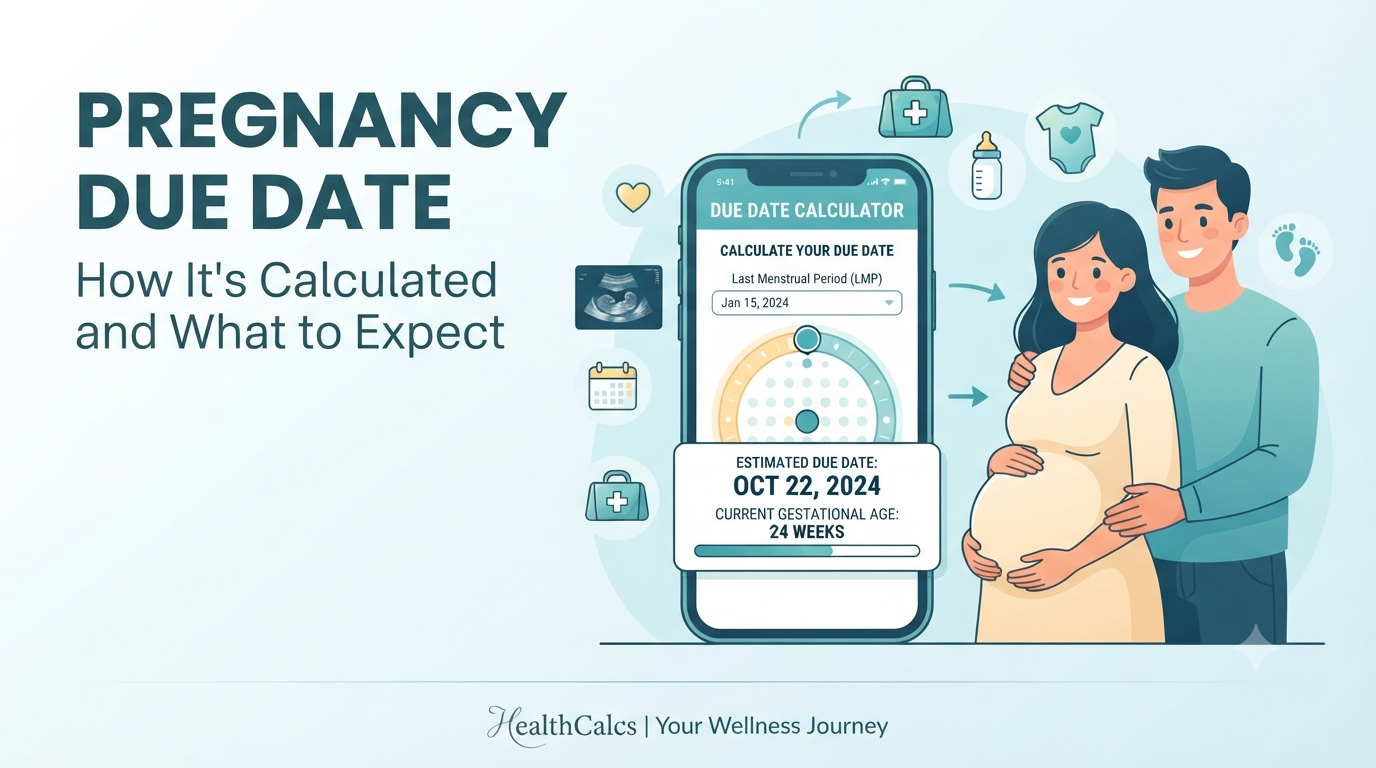
Many people assume pregnancy lasts exactly nine months, but healthcare providers usually calculate pregnancy as 40 weeks from the first day of the mother's last menstrual period (LMP).
That means the pregnancy clock actually starts before conception takes place.
This confused me the first time I learned about it. Most people think pregnancy begins on the day the baby is conceived, but doctors use the first day of the last period because it's usually easier to identify than the exact date of conception.
How Doctors Calculate a Due Date
The most common method is called Naegele's Rule.
The process is surprisingly simple:
Step 1: Find the First Day of Your Last Period
Let's say your last menstrual period started on January 1.
Step 2: Add One Year
January 1 becomes January 1 of the following year.
Step 3: Subtract Three Months
January becomes October.
Step 4: Add Seven Days
October 1 becomes October 8.
Your estimated due date would be October 8.
Many pregnancy calculators online use this exact formula behind the scenes.
What If You Don't Remember Your Last Period?
This happens more often than people think.
Some women have irregular cycles, while others simply don't remember the exact date.
In those situations, doctors often rely on ultrasound measurements.
During the first trimester, ultrasound scans can estimate the baby's gestational age by measuring the embryo or fetus. Early ultrasounds are generally considered one of the most accurate ways to determine a due date.
A friend of mine had irregular cycles and received three different due dates from online calculators. Her first ultrasound eventually provided the estimate her doctor used throughout the pregnancy.
Why Due Dates Sometimes Change
One thing many first-time parents don't expect is that the due date can change.
If an early ultrasound suggests the baby is significantly larger or smaller than expected for the calculated date, healthcare providers may adjust the due date.
This isn't usually a sign that something is wrong.
It's simply an effort to make the estimate more accurate.
The earlier the ultrasound is performed, the more reliable it tends to be for dating the pregnancy.
The Truth About Due Dates
Here's something that surprised me.
Very few babies are actually born on their due date.
Research consistently shows that only a small percentage of babies arrive on the exact predicted day.
Most healthy pregnancies result in delivery within a few weeks before or after the estimated due date.
Think of the due date as a target window rather than a guaranteed day.
In our family's experience, one baby arrived five days early, another arrived eight days late, and neither situation caused any concern.
What to Expect During Each Stage of Pregnancy
Understanding the due date becomes easier when you think of pregnancy in stages.
First Trimester (Weeks 1–13)
This is often the period filled with the most uncertainty.
Common experiences include:
- Fatigue
- Morning sickness
- Food aversions
- Increased emotions
- Frequent urination
Many women spend this stage checking pregnancy apps every day.
Popular apps like Pregnancy+, What to Expect, and BabyCenter provide week-by-week updates that can help make sense of the changes happening in the body.
Second Trimester (Weeks 14–27)
Many people consider this the most comfortable phase.
Energy levels often improve.
Morning sickness may decrease.
The baby bump becomes more noticeable.
One of the most exciting milestones is feeling the baby's movements for the first time.
I still remember how excited my cousin was when she described those first little kicks. She said it felt like tiny bubbles popping inside her stomach.
Third Trimester (Weeks 28–40)
As the due date approaches, anticipation grows.
Common experiences include:
- Back pain
- Swelling
- Difficulty sleeping
- Frequent bathroom trips
- Braxton Hicks contractions
Many parents start preparing hospital bags, installing car seats, and double-checking baby supplies.
This stage often feels both exciting and endless at the same time.
Helpful Tools for Tracking Your Due Date
Today, there are plenty of reliable tools available.
Some useful options include:
Pregnancy Apps
- Pregnancy+
- BabyCenter
- What to Expect
- Ovia Pregnancy
Online Due Date Calculators
Many healthcare websites offer free calculators where you enter your last menstrual period date and receive an estimated due date instantly.
Medical Ultrasounds
No app or calculator can replace professional prenatal care.
Ultrasounds remain one of the most reliable methods for confirming pregnancy dating, especially during the first trimester.
Common Mistakes People Make
After talking with many expecting parents, I've noticed several common misconceptions.
Assuming the Due Date Is Guaranteed
Many parents schedule everything around the exact date.
In reality, babies often have their own timeline.
Comparing Pregnancies
Every pregnancy is different.
Just because a friend delivered at 38 weeks doesn't mean the same will happen for you.
Relying Only on Apps
Apps are useful, but they aren't substitutes for medical advice.
Always follow recommendations from your healthcare provider.
Ignoring Early Prenatal Appointments
Early prenatal visits help confirm dating, monitor health, and identify potential concerns.
Delaying these appointments can make pregnancy tracking less accurate.
What Happens If You Go Past Your Due Date?
Going past the due date is incredibly common.
Doctors usually monitor both mother and baby closely if pregnancy continues beyond 40 weeks.
Additional ultrasounds or monitoring may be recommended.
Many pregnancies naturally continue for several extra days without problems.
Your healthcare provider will explain whether waiting or inducing labor is the safest option based on your individual circumstances.
Practical Tips for Expecting Parents
If you've recently discovered you're pregnant, here are a few things that can make the journey smoother:
- Record the first day of your last menstrual period.
- Schedule an early prenatal appointment.
- Use a trusted pregnancy tracking app.
- Keep a notebook or digital journal of symptoms and milestones.
- Focus on overall health rather than obsessing over the exact due date.
- Prepare for flexibility because babies rarely follow calendars perfectly.
One lesson I've learned from watching family and friends go through pregnancy is that the due date matters, but it's only one small part of a much bigger experience.
The real goal isn't reaching a specific date. It's supporting a healthy pregnancy and preparing for the arrival of your baby whenever that special day happens.
For most parents, the due date serves as a helpful guide, not a promise. And once the baby arrives, you'll probably care a lot less about whether they were early or late and a lot more about finally meeting them.
Written & Reviewed by Dr. Zil e Norain Tanveer
MBBS | Health & Wellness Expert |
Dr. Zil e Norain Tanveer is a qualified medical professional with a focus on preventive healthcare, nutrition, and wellness education. She reviews all health content on HealthCalc to ensure accuracy and reliability for every reader.