A few years ago, I stepped on a scale after several months of consistent workouts and felt completely defeated.
The number staring back at me barely moved.
I had been exercising four to five times a week, paying attention to my meals, and making an effort to stay active. Yet according to the scale, it looked like almost nothing had changed.
For a while, I assumed I was doing something wrong.
Maybe I wasn't working hard enough.
Maybe I wasn't eating correctly.
Maybe my workouts weren't effective.
Then a fitness coach at my gym asked me a simple question:
"Have you checked your lean body mass?"
Honestly, I had no idea what he meant.
That conversation completely changed the way I track fitness progress.
Instead of focusing only on body weight, I started paying attention to how much of my body was made up of muscle, bones, organs, and other non-fat tissue. That's when I discovered lean body mass calculators and why they can be incredibly useful for anyone trying to improve their fitness and nutrition strategy.
If you've ever felt frustrated by the scale, this might be one of the most valuable fitness tools you've never used.
The Problem With Using Weight Alone
For years, I treated body weight as the ultimate measurement of success.
If the number went down, I assumed I was making progress.
If the number stayed the same, I felt discouraged.
The problem is that body weight doesn't tell the whole story.
Imagine two people who both weigh 80 kilograms.
One person has a higher percentage of muscle.
The other has a higher percentage of body fat.
The scale shows the same number for both people, but their body composition is completely different.
This is why relying only on weight can be misleading.
You might lose fat while gaining muscle and see very little change on the scale.
In some cases, you could even weigh slightly more while becoming healthier and stronger.
That's where lean body mass becomes useful.
What Is Lean Body Mass?
Lean body mass refers to everything in your body except fat.
This includes:
- Muscles
- Bones
- Organs
- Water
- Connective tissues
In simple terms, it's the "active" part of your body that supports movement, strength, metabolism, and overall function.
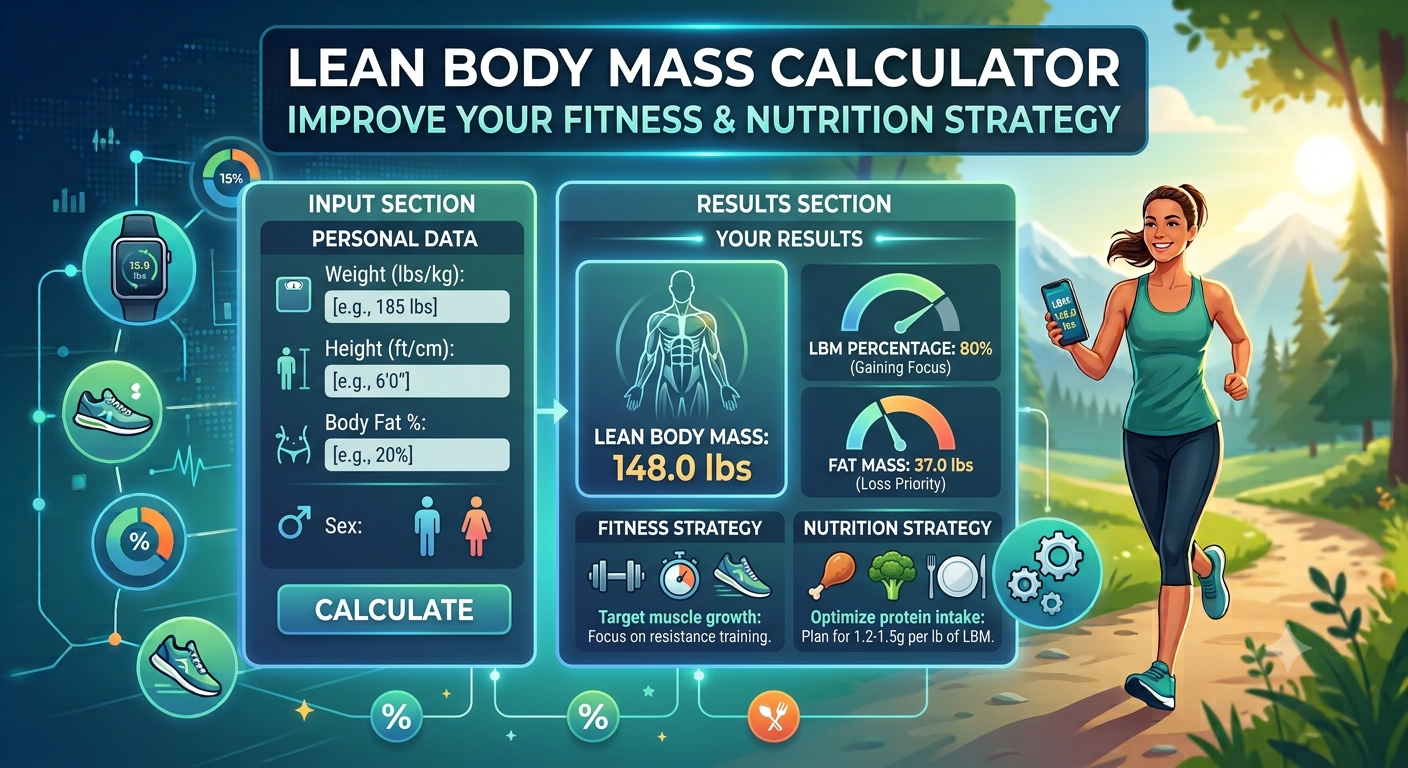
A lean body mass calculator estimates how much of your total weight comes from these non-fat components.
Many calculators use body fat percentage and total body weight to provide an estimate.
For example:
If you weigh 80 kg and have 20% body fat:
- Fat mass = 16 kg
- Lean body mass = 64 kg
That number can provide much more useful information than body weight alone.
Why I Started Paying Attention to Lean Body Mass
My biggest breakthrough came during a period when the scale barely changed.
Over several months, I lost body fat and gained muscle.
My weight stayed relatively stable.
At first, I thought I was stuck.
Then I compared my body measurements, progress photos, and body composition readings.
The difference was obvious.
My waist became smaller.
My strength improved.
My clothes fit better.
The scale hadn't told the full story.
Tracking lean body mass helped me understand what was really happening.
That experience taught me an important lesson:
Not all weight is created equal.
How a Lean Body Mass Calculator Helps
Many people use these calculators for several practical reasons.
Better Fitness Tracking
A lean body mass calculator helps you see whether you're preserving muscle while losing fat.
This is especially important during weight-loss programs.
Losing weight is one thing.
Losing muscle along with it is another.
More Accurate Nutrition Planning
Once you know your lean body mass, you can make more informed nutrition decisions.
Many nutrition coaches use lean body mass when estimating:
- Protein needs
- Calorie targets
- Macronutrient goals
This creates a more personalized approach than simply using body weight.
Setting Realistic Expectations
One common mistake is expecting rapid weight changes.
When you understand lean body mass, you realize that progress can occur even when body weight changes slowly.
This mindset can prevent unnecessary frustration.
How to Calculate Lean Body Mass
There are several ways to estimate lean body mass.
Option 1: Use an Online Lean Body Mass Calculator
The easiest method is using a calculator that estimates lean body mass based on your:
- Height
- Weight
- Gender
- Body fat percentage
One useful tool is the calculator available at:
https://www.calculator.net/lean-body-mass-calculator.html
It provides quick estimates using several recognized formulas.
Option 2: Smart Scales
Many modern smart scales estimate body composition.
Popular options include:
- Withings
- Renpho
- Eufy Smart Scale
- Fitbit-compatible scales
These devices estimate:
- Body fat percentage
- Muscle mass
- Water percentage
- Lean body mass
They're not perfect, but they can help track trends over time.
Option 3: Fitness Assessments
Many gyms and fitness centers offer body composition testing using:
- Bioelectrical impedance devices
- Skinfold measurements
- Advanced scanning systems
These methods often provide more detailed results than standard scales.
How I Actually Use Lean Body Mass Data
Over time, I developed a simple system.
I don't obsess over every decimal point.
Instead, I focus on trends.
Here's the process I follow.
Step 1: Measure Body Composition
I check body composition once every few weeks.
Daily measurements usually create unnecessary stress.
Step 2: Record Results
I keep track of:
- Body weight
- Body fat percentage
- Lean body mass
- Waist measurement
A simple spreadsheet works perfectly.
Step 3: Compare Trends
If lean body mass stays stable while body fat decreases, that's usually a positive sign.
If lean body mass drops significantly during dieting, it may signal a need to adjust training or nutrition.
Step 4: Make Small Adjustments
Instead of making drastic changes, I modify one thing at a time.
For example:
- Increase protein intake
- Improve sleep habits
- Add strength training sessions
- Adjust calorie intake slightly
Small changes are easier to maintain.
Why Lean Body Mass Matters for Nutrition
One mistake I made early on was focusing only on calories.
I thought eating fewer calories automatically meant better results.
That approach didn't work very well.
I often felt tired and struggled during workouts.
Eventually, I learned that preserving lean body mass requires adequate nutrition.
Protein became especially important.
People who engage in resistance training often benefit from consuming enough protein to support muscle maintenance and recovery.
This doesn't mean extreme diets or excessive supplementation.
It simply means making sure your body has the nutrients it needs to function properly.
Real-Life Example: Fat Loss Without Muscle Loss
A friend of mine decided to lose weight before a family event.
He reduced calories aggressively and lost weight quickly.
The scale showed success.
However, when he checked his body composition later, he discovered he had lost both fat and muscle.
His energy dropped.
His strength declined.
And he struggled to maintain results.
A few months later, he took a different approach.
This time he:
- Strength trained regularly
- Increased protein intake
- Used lean body mass tracking
- Lost weight more gradually
The outcome was completely different.
He maintained more muscle and felt much stronger throughout the process.
That experience reinforced something many fitness professionals emphasize:
The goal isn't simply losing weight.
The goal is improving body composition.
Common Mistakes People Make
Obsessing Over Daily Numbers
Body composition fluctuates.
Hydration, meals, exercise, and even sleep can influence readings.
Focus on long-term trends.
Ignoring Strength Training
Many people try to lose weight through diet alone.
Strength training helps preserve lean body mass during fat loss.
Eating Too Little
Severely restricting calories can increase the risk of muscle loss.
Slow, sustainable progress is often more effective.
Trusting Every Measurement Completely
Smart scales and calculators provide estimates.
Use them as helpful tools rather than absolute truths.
Comparing Yourself to Others
Everyone has different genetics, body structures, and fitness goals.
Your lean body mass journey is unique to you.
Helpful Tools I've Used
Over the years, a few tools have made tracking easier.
MyFitnessPal
Useful for monitoring calorie and protein intake.
Fitbit
Helps track activity levels and exercise consistency.
Renpho Smart Scale
Provides basic body composition estimates and trend tracking.
Google Sheets
Still one of my favorite tools for monitoring long-term progress.
Simple and effective.
The Most Surprising Thing I Learned
The biggest lesson wasn't about muscle.
It was about mindset.
Before tracking lean body mass, I judged progress almost entirely by the scale.
That often led to frustration.
Once I started paying attention to body composition, I gained a clearer picture of what was happening inside my body.
Some weeks the scale barely moved.
Yet my strength improved.
My clothes fit differently.
My body fat percentage decreased.
Those changes mattered far more than a single number.
A Smarter Way to Measure Progress
If you're serious about improving fitness, nutrition, or overall health, lean body mass can provide valuable context that body weight alone cannot.
You don't need expensive equipment.
You don't need perfect measurements.
And you certainly don't need to become obsessed with data.
A simple lean body mass calculator can help you better understand your body, set realistic goals, and make more informed decisions about training and nutrition.
For me, it shifted the focus away from chasing a smaller number on the scale and toward building a healthier, stronger body.
And that's a much more rewarding goal to pursue over the long term.