A few years ago, I made the same mistake that many people make when trying to lose weight.
I decided to eat as little as possible.
My logic seemed simple: if eating fewer calories helps with weight loss, then eating dramatically fewer calories should work even faster.
For the first couple of weeks, the scale moved.
I felt excited.
Then things started going downhill.
My energy crashed. My workouts suffered. I felt hungry all the time, and eventually I gave in to cravings that seemed impossible to control.
The weight I lost quickly started coming back.
That's when I realized I wasn't dealing with a lack of willpower. I simply didn't understand how many calories my body actually needed.
Once I learned how to calculate my ideal calorie intake for weight loss, everything became much easier. I stopped guessing, stopped following extreme diets, and started seeing more consistent results.
If you've ever wondered how many calories you should eat to lose weight without feeling miserable, this guide will help you figure it out in a practical way.
Why Most People Get Calorie Intake Wrong
One thing I've noticed after talking with friends, gym members, and people trying to lose weight is that most of us tend to fall into one of two extremes.
Some people underestimate how much they eat.
Others cut calories far too aggressively.
I've personally done both.
At one point, I thought I was eating around 2,000 calories per day. After tracking my meals honestly, I discovered I was closer to 2,800.
A few years later, I made the opposite mistake and tried eating only 1,200 calories daily. I lasted about three weeks before my energy levels completely tanked.
The sweet spot is usually somewhere in the middle.
That's why calculating your calorie needs is so important.
Understanding Calories Without Overcomplicating Things
You don't need a degree in nutrition to understand calories.
Think of calories as energy.
Your body uses energy for:
- Breathing
- Digestion
- Walking
- Exercise
- Thinking
- Maintaining body temperature
- Daily activities
Every day, your body burns a certain number of calories simply to stay alive and function.
If you consistently consume more calories than you burn, weight tends to increase.
If you consistently consume fewer calories than you burn, weight tends to decrease.
The challenge is figuring out how many calories your body actually uses.
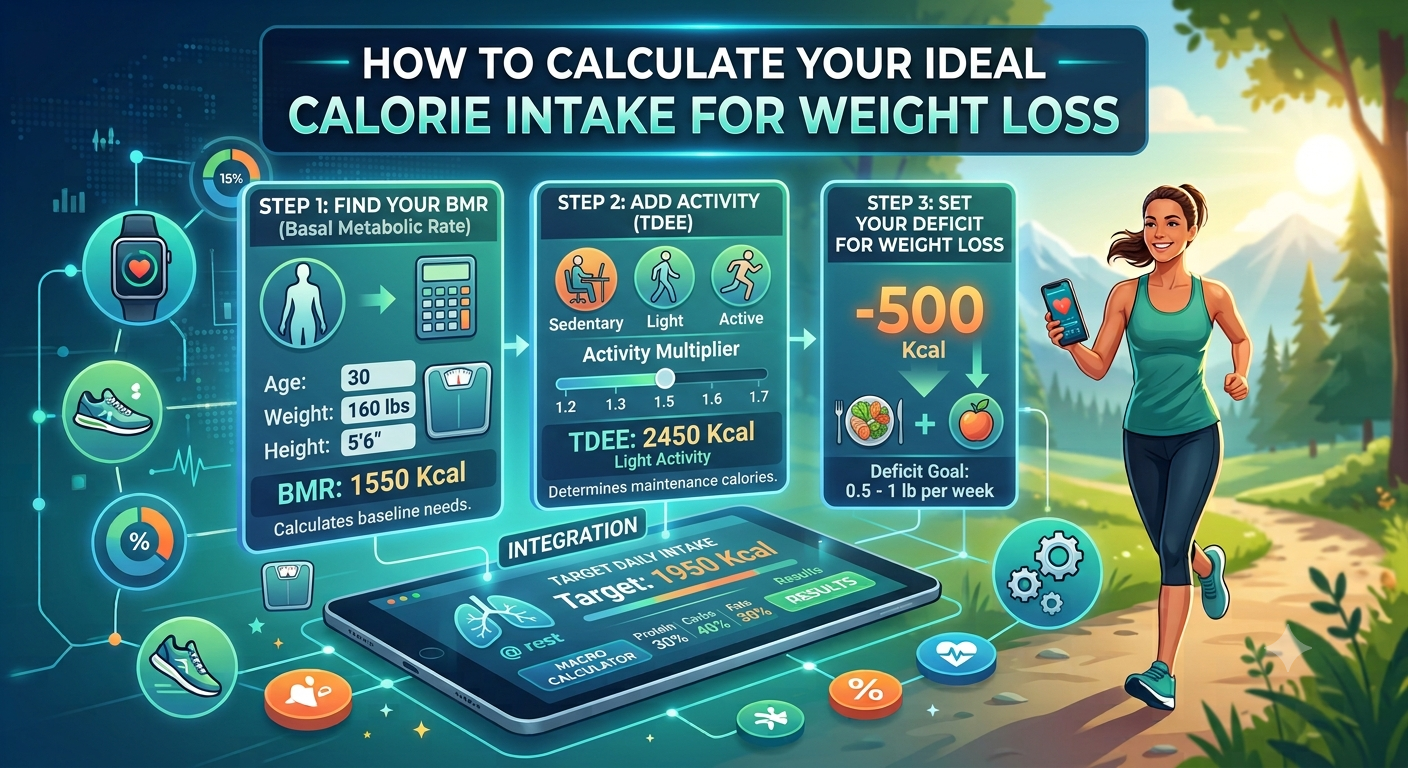
Step 1: Calculate Your Maintenance Calories
The first step is determining your maintenance calories.
This is the number of calories needed to maintain your current weight.
One of the easiest ways to estimate this is by using a Total Daily Energy Expenditure (TDEE) calculator.
A calculator like the one at:
can provide a useful starting estimate based on your:
- Age
- Height
- Weight
- Gender
- Activity level
When I first used a TDEE calculator, I was surprised by the result.
I had assumed my maintenance calories were around 2,000 per day.
The estimate suggested I was closer to 2,600.
That explained why previous low-calorie diets felt impossible to sustain.
Step 2: Create a Moderate Calorie Deficit
This is where many people go wrong.
Weight loss requires a calorie deficit, but bigger isn't always better.
After years of trial and error, I found that moderate deficits work best.
A common approach is reducing intake by:
- 250 calories per day
- 500 calories per day
- Occasionally 750 calories per day for some individuals
For example:
Maintenance calories: 2,500
Weight-loss target:
- Mild deficit = 2,250 calories
- Moderate deficit = 2,000 calories
This approach tends to feel much more manageable than extreme dieting.
Step 3: Track Your Food Honestly
This step changed everything for me.
Before tracking food, I thought I had a pretty good idea of how much I was eating.
I was wrong.
Small extras add up quickly.
Examples include:
- Cooking oils
- Salad dressings
- Coffee creamers
- Sugary drinks
- Handfuls of snacks
None of these seemed significant individually.
Together, they often accounted for hundreds of calories.
Tracking helped me see where those calories were hiding.
Apps That Make Tracking Easier
Several apps can simplify calorie tracking.
MyFitnessPal
This was the first tracking app I used consistently.
Its food database is huge, making meal logging relatively easy.
Cronometer
Great for people who want more detailed nutrition information.
It tracks vitamins, minerals, and macronutrients alongside calories.
Lose It!
A user-friendly option that many beginners find easy to navigate.
The specific app matters less than consistency.
Choose one you'll actually use.
Step 4: Prioritize Protein
One lesson I learned the hard way is that calories aren't the only thing that matters.
The quality of those calories matters too.
During one dieting phase, I focused only on reducing calories.
Technically, I stayed within my target.
But I often felt hungry and unsatisfied.
Later, I increased my protein intake and noticed a significant difference.
Protein can help support:
- Muscle maintenance
- Satiety
- Recovery from exercise
Foods I frequently include are:
- Chicken breast
- Fish
- Eggs
- Greek yogurt
- Cottage cheese
- Beans and legumes
This simple adjustment made staying within my calorie target much easier.
Step 5: Monitor Progress Over Time
One mistake many people make is expecting daily changes.
Body weight naturally fluctuates.
Things that influence scale weight include:
- Hydration
- Sodium intake
- Exercise
- Hormonal changes
- Meal timing
I've personally seen my weight fluctuate by over a kilogram within a couple of days.
That doesn't mean I gained or lost a kilogram of body fat.
Instead of focusing on daily numbers, I look at weekly averages.
This provides a much clearer picture.
Real-Life Example: Why Patience Matters
A friend of mine wanted to lose around 10 kilograms.
He started by eating far below his calorie needs.
The first month looked impressive.
Then things stalled.
He constantly felt tired, struggled with workouts, and eventually started overeating on weekends.
After recalculating his calorie needs, he increased his intake slightly and adopted a more sustainable approach.
The results came more slowly.
But they kept coming.
Six months later, he had reached his goal and maintained it.
That experience reinforced something I've seen repeatedly:
Slow progress is often more sustainable than rapid progress.
Common Mistakes People Make
Guessing Portion Sizes
I used to eyeball everything.
A tablespoon of peanut butter often became two or three tablespoons.
Using a food scale for a few weeks helped me understand portions much better.
Choosing the Lowest Possible Calorie Target
Many people think faster weight loss is always better.
In reality, extreme calorie restriction often leads to burnout.
Ignoring Liquid Calories
Calories from beverages can add up quickly.
Examples include:
- Soft drinks
- Specialty coffees
- Fruit juices
- Energy drinks
These calories are easy to overlook.
Not Adjusting Over Time
As body weight changes, calorie needs may change too.
Reassessing every few months can be helpful.
Relying on Exercise Alone
Exercise is fantastic for health and fitness.
However, many people overestimate how many calories they burn during workouts.
Nutrition usually plays the larger role in weight loss.
What Helped Me Stay Consistent
After years of experimenting with different approaches, a few habits consistently worked.
Planning Meals Ahead
Knowing what I planned to eat reduced impulsive decisions.
Keeping High-Protein Snacks Available
This helped prevent late-night junk food runs.
Focusing on Weekly Results
Daily fluctuations became less stressful.
Allowing Flexibility
I stopped aiming for perfection.
One higher-calorie meal doesn't ruin progress.
What matters is the overall pattern.
Getting Enough Sleep
Poor sleep often increased my hunger and cravings.
Improving sleep quality made sticking to calorie targets easier.
The Role of Exercise
Many people ask whether exercise is necessary for weight loss.
Technically, weight loss can occur through diet alone.
But exercise provides benefits that go far beyond calorie burn.
Regular activity can help:
- Preserve muscle mass
- Improve fitness
- Support heart health
- Boost energy levels
- Improve mood
Personally, combining strength training with regular walking has been one of the most effective strategies I've found.
When Weight Loss Slows Down
At some point, almost everyone experiences a plateau.
I've certainly been there.
The first instinct is often to slash calories even further.
Instead, I usually recommend reviewing the basics first:
- Are you tracking accurately?
- Has your activity level changed?
- Have portion sizes gradually increased?
- Are weekend habits different from weekdays?
Often the answer appears once you look closely.
The Biggest Lesson I Learned
If I could go back and give my younger self one piece of advice, it would be this:
Stop chasing the lowest calorie number possible.
For years, I believed successful weight loss meant eating as little as possible.
What actually worked was finding a calorie target that I could realistically maintain.
The ideal calorie intake isn't the one that produces the fastest results.
It's the one that allows you to lose weight steadily while still feeling energized, satisfied, and able to enjoy your life.
Once I understood that, weight loss became much less stressful and much more sustainable.
And that's ultimately what most people are looking for—not just losing weight, but keeping it off without constantly feeling deprived.