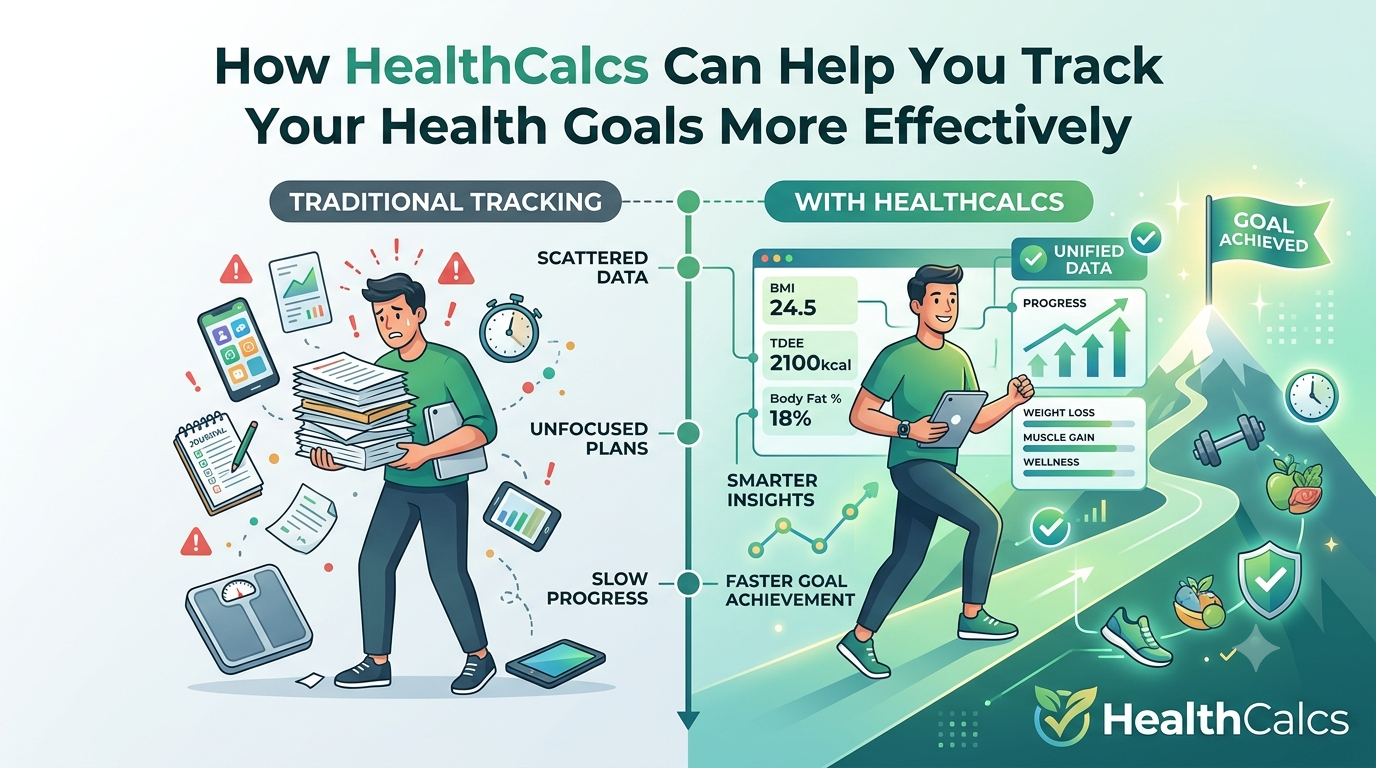
A while back, I hit a point where I felt like I was “doing everything right” for my health… but nothing was really changing.
I was going to the gym regularly, trying to eat cleaner, drinking more water, even walking more during the day. But when I looked in the mirror or stepped on the scale, it just felt like nothing was adding up.
That frustration slowly turned into confusion.
Was I eating too much? Not enough? Training wrong? Sleeping badly?
Honestly, I didn’t know anymore.
What finally helped wasn’t a new workout plan or some extreme diet. It was something much simpler: I started tracking my health properly using HealthCalcs-style tools.
And I don’t mean obsessing over numbers every hour. I mean actually understanding what my body was doing instead of guessing.
That shift changed everything for me.
Why Guessing Doesn’t Work for Health Goals
One mistake I kept repeating was relying on “feelings” instead of data.
If I felt bloated, I assumed I was eating wrong.
If I felt tired, I blamed my sleep.
If my weight didn’t drop for a week, I thought I had failed.
But the body doesn’t work on daily emotions. It works on patterns over time.
That’s where I realized I needed something more structured—something that could give me direction instead of confusion.
HealthCalcs became that bridge for me.
What HealthCalcs Actually Help You Do
Before I started using these tools properly, I thought they were just random online calculators.
But once I started using them consistently, I saw how useful they actually are.
They help you track things like:
- Daily calorie needs
- Weight trends
- Body fat percentage
- Lean body mass
- Sleep timing
- Hydration levels
- Fitness progress
Instead of guessing your progress, you start seeing it in numbers that actually make sense.
Not perfect numbers—but helpful ones.
The First Big Change: Understanding My Calories
The first time I used a calorie calculator, I remember thinking, “This can’t be right.”
It told me I was eating more than I thought—even though I felt like I was eating “healthy.”
That was my first reality check.
I started tracking food using MyFitnessPal, and suddenly things became clearer.
A few small things I never considered were adding up:
- Cooking oil
- Snacks between meals
- Sugary drinks on weekends
- Portion sizes I was guessing wrong
Nothing dramatic alone—but together, they mattered a lot.
What changed after tracking calories properly:
- My energy became more stable
- I stopped overeating unknowingly
- My weight fluctuations made more sense
- I finally understood what “maintenance calories” meant for me
That one change made everything else easier.
BMI and Body Composition: Useful, But Not Enough Alone
I used to check BMI like it was the final answer about my health.
If it went up, I panicked. If it went down, I relaxed.
Now I treat it more like a quick reference.
What actually gave me better insight was combining BMI with:
- Body fat percentage
- Lean body mass
- Waist measurements
Because weight alone can be misleading.
I remember a phase where my weight didn’t change at all for weeks—but my body looked noticeably different. I was losing fat and gaining muscle at the same time.
Without body composition tracking, I would’ve thought I was stuck.
Lean Body Mass: The Metric That Changed My Thinking
One of the most underrated HealthCalcs tools, in my opinion, is lean body mass calculation.
It helped me stop obsessing over the scale.
Lean body mass includes everything except fat:
- Muscle
- Organs
- Bones
- Water
When I started strength training, this metric helped me understand progress better than weight ever did.
Instead of asking “How much did I lose?”, I started asking “What am I losing—fat or muscle?”
That shift is huge.
Water Intake Tracking: Something I Completely Ignored Before
I used to think hydration was simple: just drink water when thirsty.
But I was wrong.
Once I started using a water intake calculator, I realized I was consistently under-drinking—especially on busy days.
At first, I didn’t think it mattered much.
But after a few weeks of better hydration, I noticed:
- Less afternoon fatigue
- Better focus
- Fewer headaches
- Improved workout performance
It wasn’t a dramatic transformation. Just a steady improvement in how I felt daily.
Sleep Tracking: The Missing Piece in My Routine
I used to think sleeping 7–8 hours was enough.
But I didn’t realize timing mattered just as much as duration.
Sleep calculators helped me understand sleep cycles better.
Instead of randomly going to bed and hoping for the best, I started planning my sleep more intentionally.
Small change I made:
- I adjusted bedtime so I wasn’t waking up mid-sleep cycle
- I stopped scrolling on my phone right before bed
- I kept sleep and wake times more consistent
The result wasn’t instant—but my mornings became less heavy and groggy.
How I Actually Use HealthCalcs Now (Simple System)
I don’t track everything every day anymore. That used to burn me out.
Instead, I use a simple structure:
Weekly:
- Weight check
- Rough calorie tracking
- Step count review (via phone or Fitbit)
Monthly:
- BMI update
- Body fat estimate
- Waist measurement
Every few months:
- Recalculate calorie needs
- Adjust fitness goals
- Review progress honestly
This keeps things balanced—not obsessive.
Real-Life Example: When Tracking Fixed a Plateau
A friend of mine was frustrated because his weight wasn’t changing even though he was “eating less.”
We looked at his routine together.
Weekdays were fine.
But weekends were completely untracked.
Takeout meals, snacks, drinks—nothing extreme, but enough to cancel the weekly deficit.
Once he started tracking properly using Cronometer, everything made sense.
He didn’t need a stricter diet.
He just needed awareness.
That’s something I see a lot.
Common Mistakes People Make With Health Tracking
I’ve made almost all of these mistakes myself, so this isn’t judgment—just experience.
1. Over-tracking everything
It becomes stressful and unsustainable.
2. Ignoring long-term trends
Daily changes mean almost nothing.
3. Using wrong inputs
Guessing activity level or portion sizes can mess up results.
4. Expecting instant results
Health changes take time—weeks, not days.
5. Treating calculators like medical advice
They’re tools, not diagnoses.
Once I stopped making these mistakes, everything felt easier.
Tools That Helped Me Along the Way
HealthCalcs works best when paired with real tracking tools.
Some I’ve personally used:
- MyFitnessPal → food tracking
- Fitbit → sleep + activity
- Google Fit → basic health data
- Apple Health → overall health overview
- Cronometer → detailed nutrition tracking
Together, they turn numbers into patterns you can actually understand.
One Simple Resource I Still Use
When I want quick health estimates without overthinking, I sometimes use:
https://www.calculator.net/health-calculator.html
It’s straightforward and helps when I just want a quick baseline for calories, BMI, or body fat.
Final Thoughts From Personal Experience
The biggest lesson I learned from using HealthCalcs tools is simple:
You can’t improve what you don’t understand.
Before I started tracking properly, I was guessing everything about my health. Sometimes I was right. Most of the time, I wasn’t.
Once I started using calculators and tracking tools, I didn’t magically become fit overnight—but I finally understood what was happening in my body.
And that understanding made everything else easier:
- Eating became less confusing
- Training felt more purposeful
- Progress became easier to see
- Motivation stayed more stable
HealthCalcs didn’t do the work for me.
But it showed me where to focus my effort.
And sometimes, that’s exactly what people need most.
Written & Reviewed by Dr. Zil e Norain Tanveer
MBBS | Health & Wellness Expert |
Dr. Zil e Norain Tanveer is a qualified medical professional with a focus on preventive healthcare, nutrition, and wellness education. She reviews all health content on HealthCalc to ensure accuracy and reliability for every reader.