I still remember the moment that made me take blood sugar seriously.
It wasn’t a hospital emergency or anything dramatic. It was a routine checkup where the nurse casually said, “Your sugar is slightly on the higher side—keep an eye on it.”
That “slightly” stayed in my head longer than I expected.
A few days later, I found myself searching for a diabetes risk calculator online—not because I was diagnosed with diabetes, but because I wanted to understand where I actually stood.
And honestly, that one small habit check changed how I look at food, movement, and daily routines.
The mistake I didn’t realize I was making
Like many people, I thought diabetes was something that “happens later in life.”
So my mindset was:
- I’ll fix it if it ever becomes a problem
- A little sugar won’t matter
- I’m not diabetic, so I’m fine
But the truth is, risk doesn’t start the day you’re diagnosed.
It builds quietly over time through daily habits.
Things like:
- Irregular meals
- High sugar intake
- Low physical activity
- Poor sleep patterns
- Stress
I wasn’t paying attention to any of these consistently.
What a diabetes risk calculator actually does
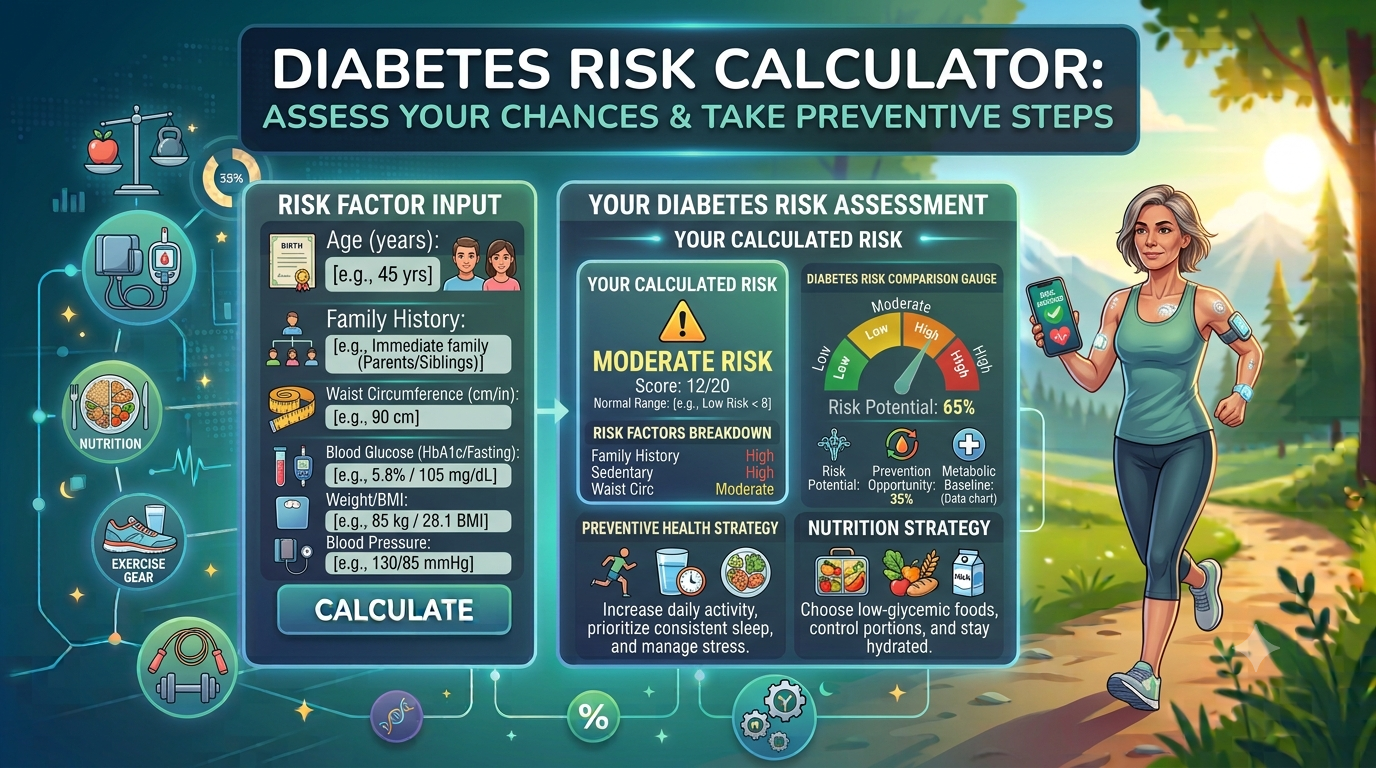
A diabetes risk calculator doesn’t diagnose diabetes.
Instead, it estimates your likelihood of developing type 2 diabetes based on lifestyle and health factors.
Most calculators ask questions like:
- Age
- Weight
- Waist size
- Family history
- Physical activity level
- Diet habits
Based on this, it gives you a risk score or category like:
- Low risk
- Moderate risk
- High risk
It’s not a medical verdict—it’s a warning signal.
And sometimes, that early signal is exactly what you need.
My first experience using a diabetes risk calculator
The first time I used one, I didn’t take it too seriously.
I thought I’d get a “low risk” result and move on.
But the result came back as “moderate risk.”
That surprised me.
Not because it was scary, but because it didn’t match how I saw myself.
I didn’t feel unhealthy. I wasn’t overweight in an extreme way. But the calculator was picking up on patterns I was ignoring.
That’s when I realized:
👉 Feeling fine and being fine aren’t always the same thing.
Why diabetes risk is often underestimated
One thing I noticed is that diabetes risk rarely feels urgent in the beginning.
You don’t wake up one day and suddenly develop it. It builds slowly.
Some early warning signs people often ignore include:
- Constant tiredness after meals
- Sugar cravings
- Belly fat accumulation
- Frequent hunger
- Energy crashes
I had experienced a few of these but never connected them.
How a diabetes risk calculator works behind the scenes
Most calculators estimate risk using research-based models.
They consider:
1. Lifestyle factors
- Activity level
- Diet habits
- Smoking or alcohol use
2. Body measurements
- BMI
- Waist circumference
3. Family history
Genetics plays a strong role in type 2 diabetes risk.
4. Age factor
Risk generally increases with age, especially after 35–40.
When combined, these factors create a risk profile.
Tools I used to track my health better
After that initial wake-up call, I started paying more attention.
I didn’t go extreme—I just added small tools:
- Google Fit (daily activity tracking)
- MyFitnessPal (food logging)
- A simple glucometer (occasional sugar checks)
- Waist measurement tape
- Online diabetes risk calculators for periodic checks
Nothing complicated—just consistent awareness.
Small changes that made a big difference
Once I understood my risk level, I didn’t try to overhaul everything overnight.
Instead, I focused on simple adjustments:
1. Walking after meals
Even 10–15 minutes made a noticeable difference in energy levels.
2. Reducing sugary drinks
This was harder than expected but had the biggest impact.
3. Balanced meals
Adding protein and fiber helped reduce sugar spikes.
4. Consistent sleep
Poor sleep was affecting hunger and cravings more than I realized.
5. Portion control
Not restriction—just awareness.
Real-life example that made it clear
Let’s compare two people:
Person A
- Sedentary lifestyle
- High sugar intake
- Irregular meals
- No exercise routine
Person B
- Walks daily
- Balanced diet
- Limited sugary foods
- Regular sleep schedule
Even if both feel “healthy,” their diabetes risk scores would be very different.
That’s the power of early awareness.
Common mistakes people make
I made several of these myself before understanding risk properly:
Mistake 1: Ignoring family history
Genetics matter more than most people think.
Mistake 2: Relying only on weight
You can have normal weight and still have high risk.
Mistake 3: Thinking symptoms come early
Type 2 diabetes often develops silently.
Mistake 4: Overreacting to one result
A single test isn’t a diagnosis.
Mistake 5: Not retesting over time
Risk changes with lifestyle.
What actually changed for me
After using the diabetes risk calculator regularly and making small changes, I noticed:
- More stable energy levels
- Fewer sugar cravings
- Better control over snacking
- Increased awareness of food choices
- Improved daily activity habits
But the biggest change wasn’t physical—it was awareness.
I started seeing patterns in my lifestyle that I had ignored for years.
Why early awareness matters so much
The more I learned, the more I realized something important:
Type 2 diabetes is often preventable or delayed with lifestyle changes.
That doesn’t mean fear—it means opportunity.
If you know your risk early, you have time to adjust habits before problems develop.
A simple way to understand diabetes risk
Here’s how I explain it to friends:
A diabetes risk calculator is like a warning light in a car dashboard.
It doesn’t mean the engine has failed.
It means something needs attention before it becomes a real problem.
When a diabetes risk calculator is most useful
It’s especially helpful if you:
- Have a family history of diabetes
- Lead a sedentary lifestyle
- Experience frequent sugar cravings
- Are overweight or have belly fat
- Want preventive health awareness
- Haven’t done a health check in a while
Even healthy people can benefit from periodic checks.
Final thoughts
Using a diabetes risk calculator didn’t make me anxious—it made me more aware.
Before I used it, I assumed health was something you only worried about after symptoms appeared. After using it, I realized prevention starts much earlier.
It’s not about labeling yourself as “high risk” or “low risk.” It’s about understanding your current habits and making small, realistic improvements over time.
The biggest lesson I learned is simple:
You don’t wait for health problems to appear before paying attention—you use early signals to stay ahead of them.
And sometimes, a small online calculator is enough to start that shift in thinking.
Suggested outbound reference: For evidence-based information on diabetes prevention and risk factors, see the official https://www.cdc.gov/
Written & Reviewed by Dr. Zil e Norain Tanveer
MBBS | Health & Wellness Expert |
Dr. Zil e Norain Tanveer is a qualified medical professional with a focus on preventive healthcare, nutrition, and wellness education. She reviews all health content on HealthCalc to ensure accuracy and reliability for every reader.