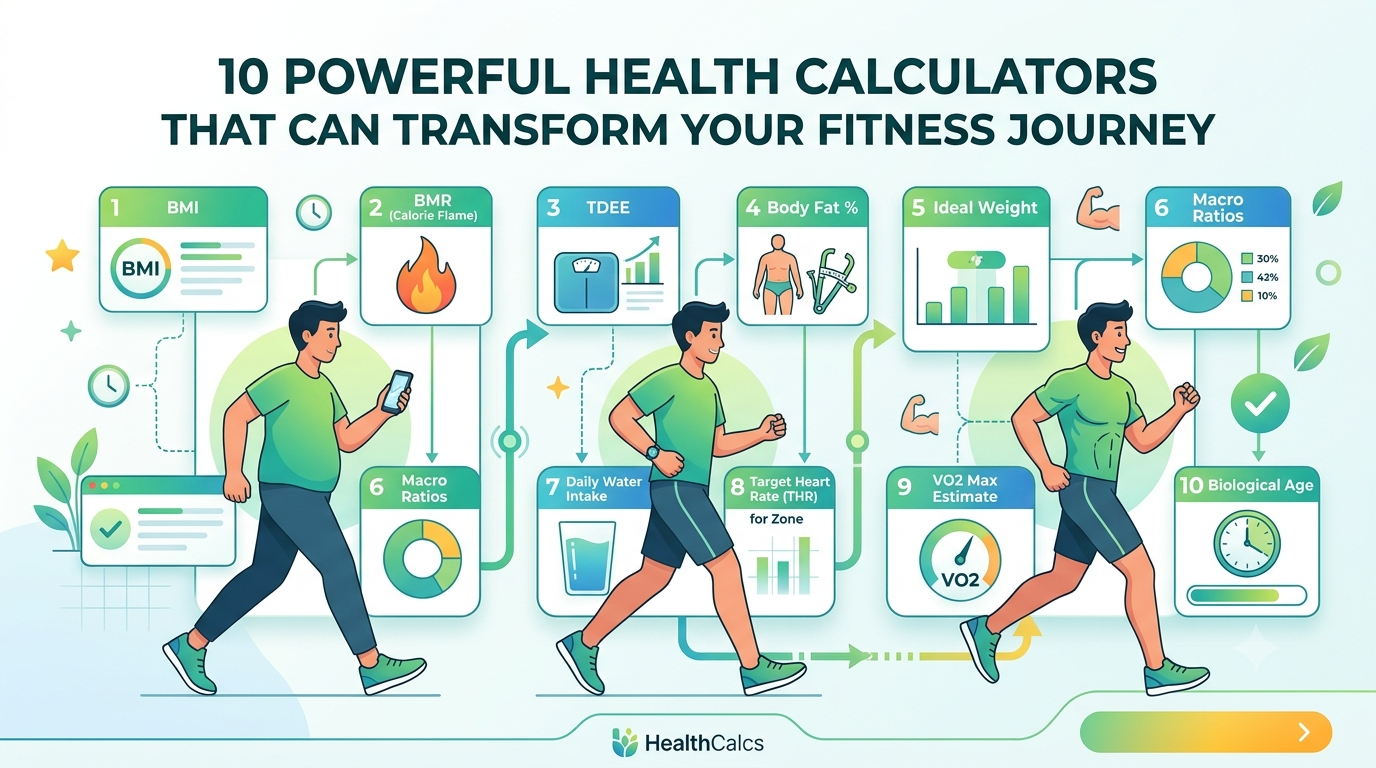
A couple of years ago, I remember staring at my workout log feeling pretty proud.
I was consistent in the gym, I was trying to “eat clean,” and I was walking more than I used to. On paper, I looked disciplined.
But in reality? I had no idea if anything was actually working.
My weight kept bouncing around. Some weeks I looked leaner, some weeks I didn’t. My energy levels were all over the place.
And the most frustrating part was this feeling of doing everything… but not understanding anything.
That’s when I started using health calculators properly.
Not randomly. Not once in a while. But as a way to actually understand what was happening in my body.
And that shift changed my entire fitness journey.
Why Health Calculators Matter More Than Motivation
I used to think fitness was all about discipline.
Eat less. Train more. Repeat.
But I learned something the hard way:
You can be consistent and still be confused.
The problem wasn’t effort—it was direction.
Health calculators gave me that direction by turning guesswork into numbers I could actually use.
Not perfect numbers. But enough to make smarter decisions.
1. Calorie Calculator – The Foundation of Everything
This is the first tool that really changed things for me.
I used to eat based on “feeling.” If I was hungry, I ate. If I thought I was being healthy, I assumed I was fine.
Then I used a calorie calculator.
It showed me my maintenance calories—and honestly, I didn’t believe it at first.
When I started tracking using MyFitnessPal, I realized I had been underestimating portions for years.
Things like:
- Cooking oil
- Snacks
- Drinks
- “Small bites” while cooking
All added up.
Why it matters:
- Helps set realistic fat loss goals
- Prevents extreme dieting
- Builds sustainable nutrition habits
2. BMI Calculator – My First Reality Check
I remember checking my BMI for the first time just out of curiosity.
I didn’t think much of it.
But seeing the result made me pause.
It wasn’t alarming—but it wasn’t what I expected either.
What I use it for now:
- Quick health reference
- General weight category check
- Tracking long-term trends
It’s not perfect, but it’s a useful starting point when you’re confused about where you stand.
3. Body Fat Percentage Calculator – The Truth Behind the Scale
There was a phase where my weight didn’t move for almost a month.
I was frustrated. I thought I was stuck.
But when I checked my body fat estimate, I noticed something interesting.
My body composition was actually improving.
That was a big lesson:
The scale doesn’t tell the full story.
Why it matters:
- Shows fat vs muscle changes
- Gives clearer progress tracking
- Reduces unnecessary frustration
4. Lean Body Mass Calculator – The Hidden Progress Tracker
Lean body mass includes everything except fat:
- Muscle
- Bones
- Water
- Organs
I ignored this for a long time.
Big mistake.
Once I started strength training, I realized I wasn’t just losing weight—I was changing my body structure.
That made me shift focus from “how much I weigh” to “what I’m building.”
5. BMR Calculator – Why Diets Used to Fail Me
This one explained a lot about my past failures.
BMR (Basal Metabolic Rate) shows how many calories your body burns at rest.
When I calculated mine, I realized I had been eating too little for too long.
No wonder I felt tired and unmotivated.
Why it helps:
- Prevents under-eating
- Builds sustainable calorie plans
- Helps understand energy needs
6. Water Intake Calculator – The Overlooked Game Changer
I used to think hydration was simple: just drink water.
But I wasn’t drinking enough—especially on busy days.
After using a water intake calculator, I realized I was consistently behind.
Once I fixed that, I noticed:
- Better focus
- Fewer headaches
- More stable energy
Nothing dramatic—but definitely noticeable in daily life.
7. Sleep Calculator – Fixing My Morning Struggles
I used to think sleep was just about hours.
But timing matters too.
Sleep calculators helped me understand sleep cycles.
Instead of randomly going to bed, I started planning sleep based on cycles.
Result? I stopped waking up feeling completely drained.
Not every day—but often enough to notice a real difference.
8. Heart Rate Zone Calculator – Smarter Cardio Training
Before this, my cardio sessions were simple:
Go hard. Get tired. Stop.
That’s it.
A heart rate zone calculator helped me understand different training intensities:
- Fat-burning zone
- Endurance zone
- High-intensity zone
Now my workouts feel more structured instead of random suffering.
Devices like Apple Watch, Fitbit, and Garmin make this even easier because they track it automatically.
9. Waist-to-Height Ratio Calculator – Simple but Powerful
This is one of the easiest calculators to use.
Just:
- Measure waist
- Compare with height
That’s it.
It gives a quick idea of fat distribution, especially around the midsection.
I like it because it’s simple but surprisingly informative.
10. TDEE Calculator – Understanding Your Real Daily Burn
TDEE (Total Daily Energy Expenditure) is basically your full daily calorie burn, including activity.
This was the calculator that helped everything click together.
Once I understood my TDEE, I finally knew:
- How much to eat for fat loss
- How much to eat for maintenance
- How much to eat for muscle gain
Before that, I was just guessing.
How I Actually Use These Calculators Together
I don’t use all of them every day—that would be overwhelming.
Instead, I keep a simple routine:
Weekly:
- Weight check
- Basic calorie tracking
- Activity monitoring (steps via phone or Fitbit)
Monthly:
- BMI check
- Body fat estimate
- Waist measurement
Every few months:
- Recalculate TDEE
- Adjust goals
- Review progress honestly
This keeps things balanced and sustainable.
Common Mistakes I Made (So You Don’t Have To)
I learned most of these the hard way.
1. Using too many calculators at once
It creates confusion instead of clarity.
2. Expecting instant results
Fitness is slow. That’s normal.
3. Ignoring consistency
One perfect week doesn’t matter without patterns.
4. Using wrong inputs
Guessing activity level ruins accuracy.
5. Obsessing over daily fluctuations
Daily weight changes mean almost nothing.
Tools That Helped Me Stay Consistent
These apps made everything easier:
- MyFitnessPal → calorie tracking
- Fitbit → sleep + activity tracking
- Google Fit → basic health overview
- Apple Health → central tracking system
- Cronometer → detailed nutrition insights
They turn calculators into real-world habits.
One Helpful Resource I Still Use
When I want quick, reliable health estimates without overthinking, I use:
https://www.calculator.net/health-calculator.html
It’s simple, fast, and beginner-friendly.
Final Thoughts From Real Experience
The biggest shift in my fitness journey didn’t come from a new workout or diet.
It came from understanding my numbers.
Health calculators didn’t make me fit overnight.
But they removed a lot of confusion that was holding me back.
Once I could see what was happening in my body, decisions became easier:
- What to eat
- How to train
- When to adjust
- When to stay consistent
Not perfect. Not complicated. Just clearer.
And in fitness, clarity is often what keeps you going long enough to actually see results.
Written & Reviewed by Dr. Zil e Norain Tanveer
MBBS | Health & Wellness Expert |
Dr. Zil e Norain Tanveer is a qualified medical professional with a focus on preventive healthcare, nutrition, and wellness education. She reviews all health content on HealthCalc to ensure accuracy and reliability for every reader.